 The Oncologist Speaks
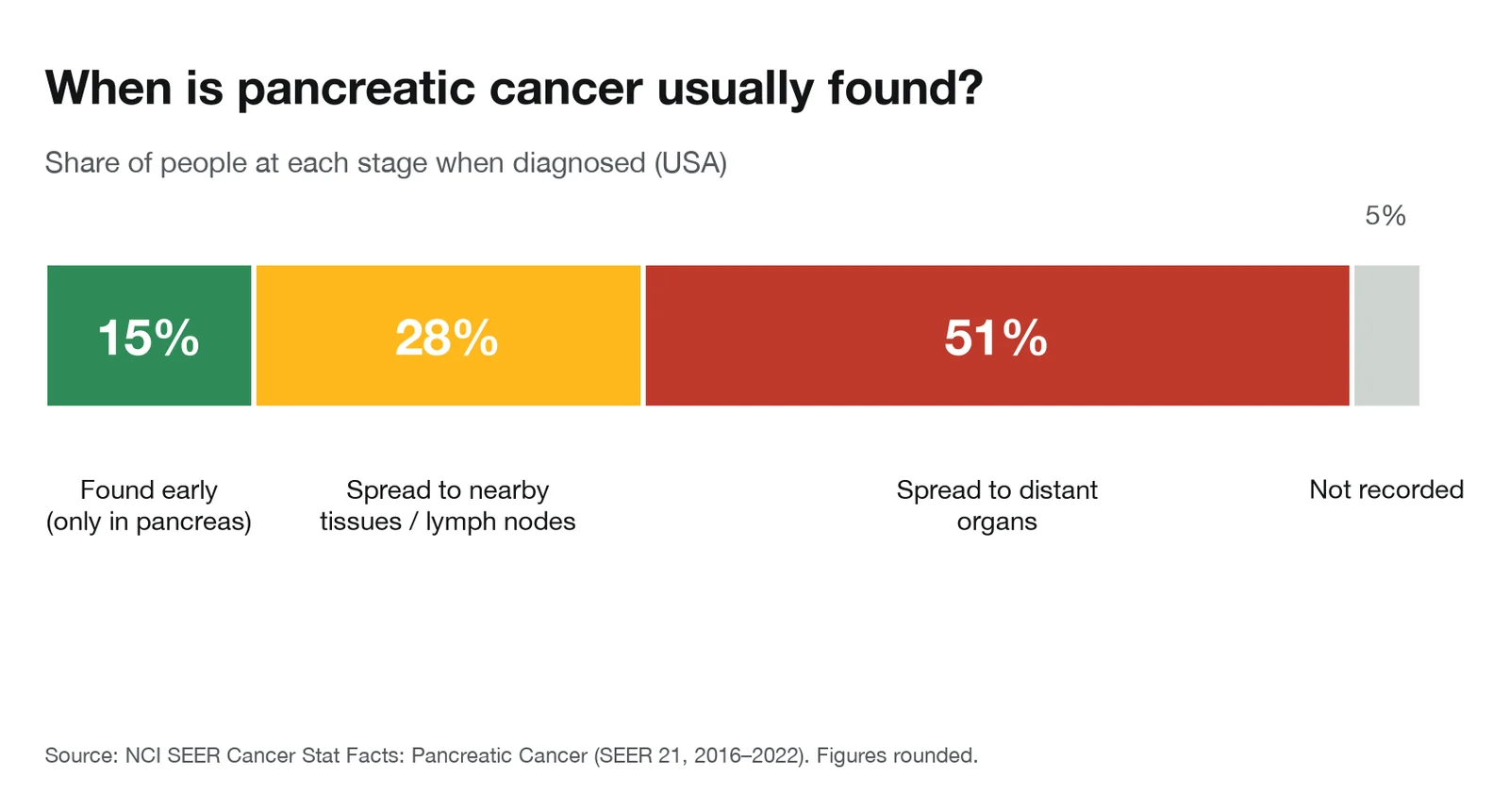
In the US, pancreatic cancer makes up about 3 in every 100 new cancer diagnoses but about 8 in every 100 cancer deaths. People call it a silent cancer, and the name fits. It usually grows for a long time without causing any symptoms, so by the time most people feel unwell, it has already spread.
I can't change where the pancreas sits in the body. What I can do is help you spot the early signs and understand your own risk. Getting checked a few weeks earlier can sometimes change which treatments are still possible.
If you only read one box, read this one
- The pancreas sits deep in your belly, so early tumors are hard to feel or see.
- About 8 in 10 people are diagnosed after the cancer has already spread.
- Smoking is the biggest risk you can change.
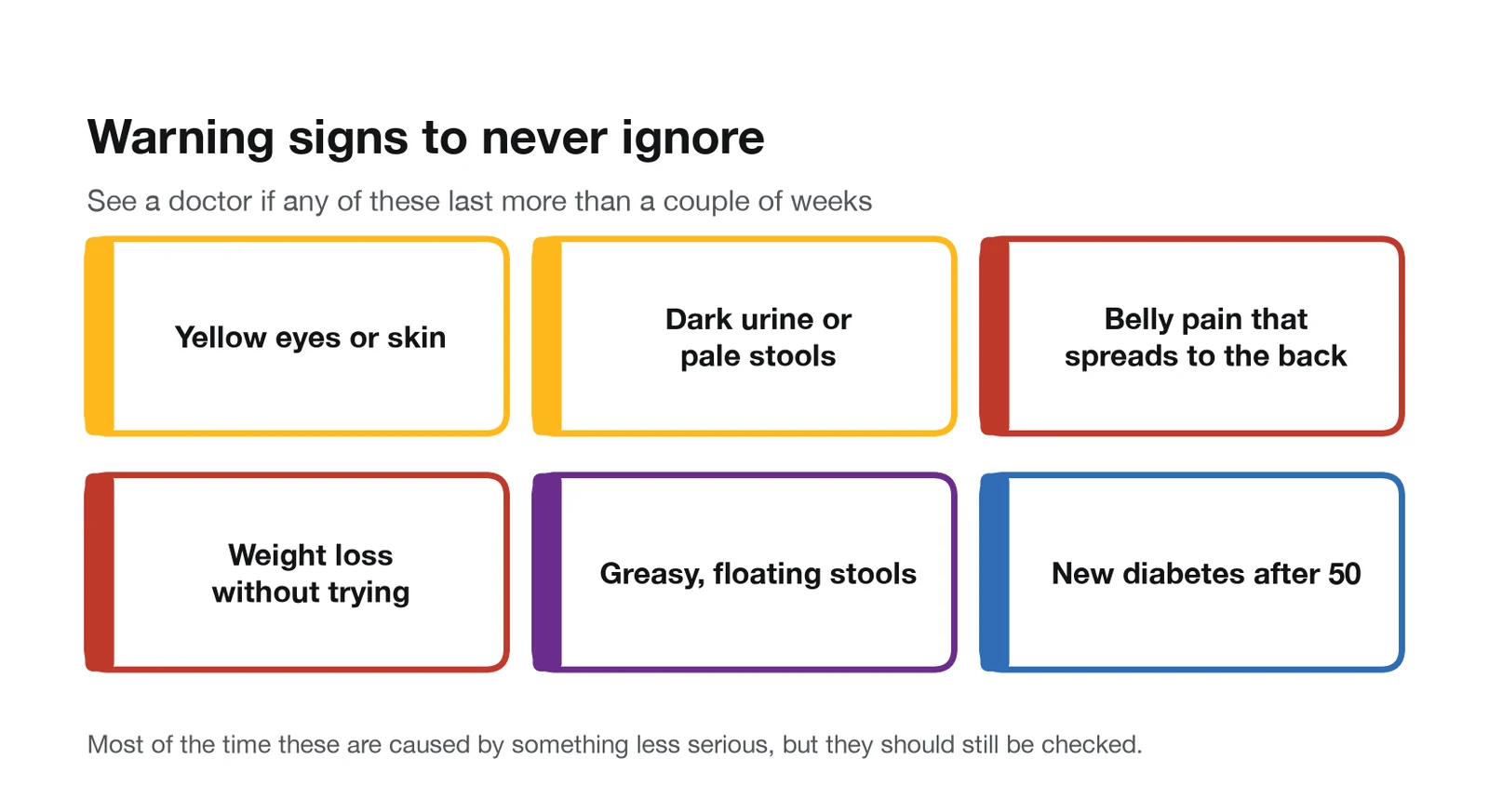
- Yellow eyes or skin, belly pain that spreads to the back, and weight loss you can't explain should all be checked by a doctor.
- There is no routine screening test for everyone. People with a strong family history or certain inherited genes may qualify for regular checks.
What is the pancreas and what does it do?
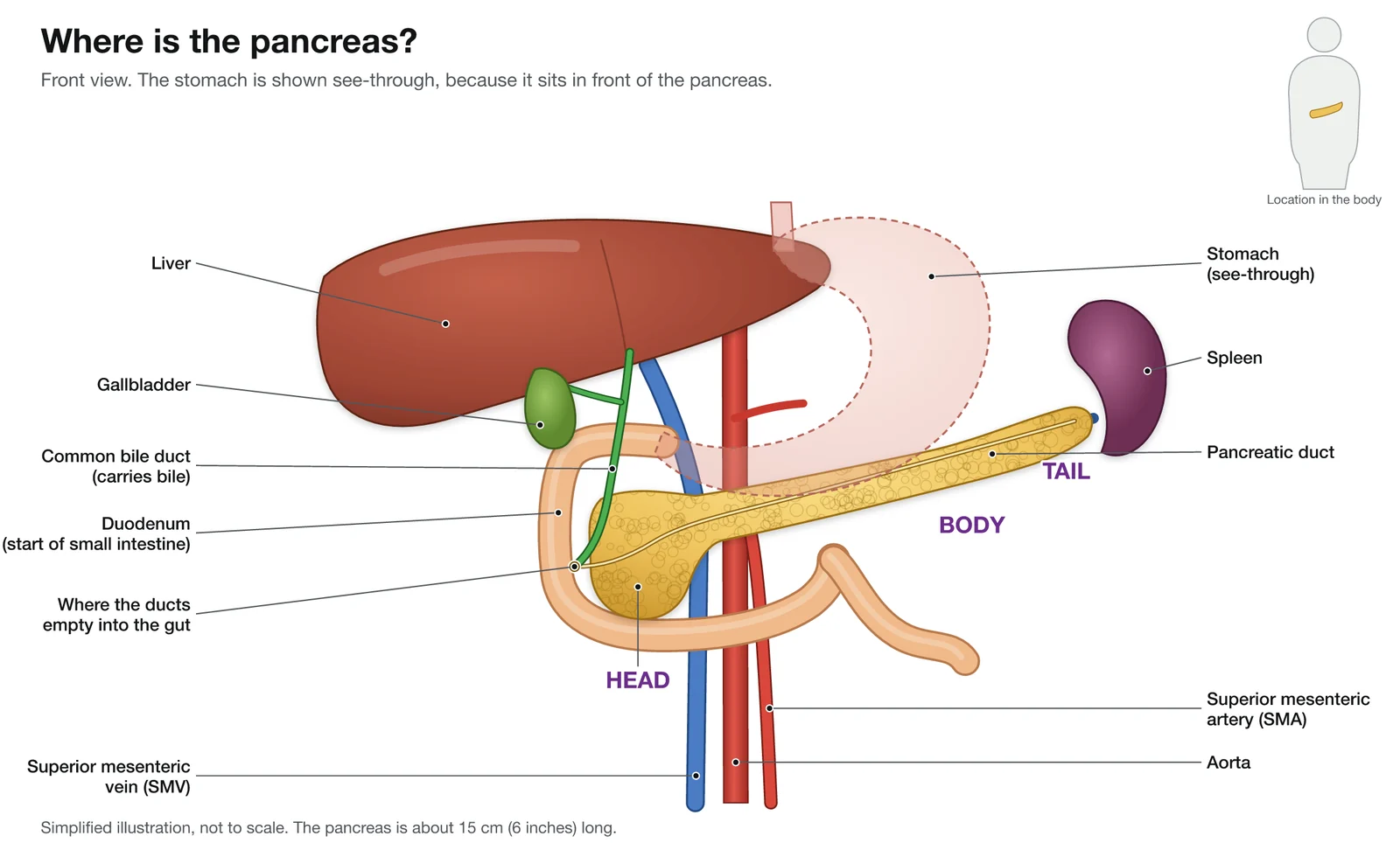
The pancreas is a soft organ about 15 cm (6 inches) long, roughly the shape of a fish lying on its side. It sits deep in the upper belly, behind the stomach and in front of the spine. Doctors split it into three parts. The wide head is on the right, tucked into the curve of the small intestine. The body runs across the middle, and the thin tail reaches over to the spleen on the left.
It has two quite different jobs. Most of the gland makes digestive juices (enzymes) that drain through a small tube, the pancreatic duct, into the gut, where they break down fat, protein and starch. Scattered through it are tiny clusters of cells called islets. These make insulin and glucagon, the hormones that keep your blood sugar steady.
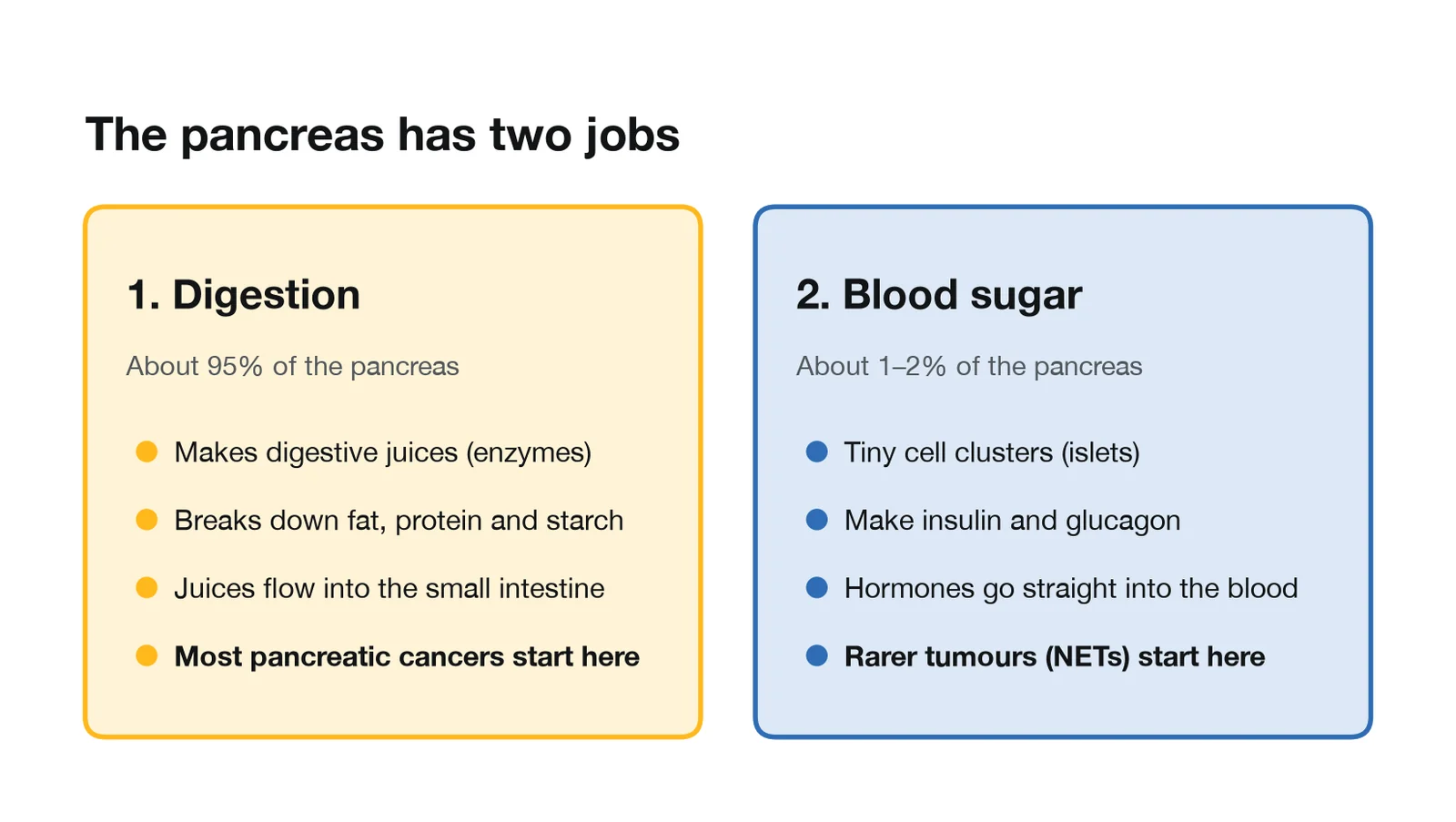
More than 9 in 10 pancreatic cancers start in the cells lining the ducts of the digestive part. The medical name is pancreatic ductal adenocarcinoma, or PDAC, and it's what most people mean when they say pancreatic cancer. It's also what this article is about. A much rarer type, the pancreatic neuroendocrine tumor (NET), grows from the hormone-making cells. NETs often grow more slowly and are treated differently.
Why pancreatic cancer matters
In the United States, about 67,500 people are expected to be diagnosed with pancreatic cancer in 2026, and about 52,700 to die from it. It is already the third most common cause of cancer death there. A 2021 study projected it could move up to second place before 2030.
Timing is the problem. Because the pancreas is hidden so deep, an early tumor rarely causes pain or a lump you can feel. Breast, bowel and cervical cancer all have screening tests offered to everyone, but pancreatic cancer has none. So about half of people only find out once the cancer has reached distant organs.
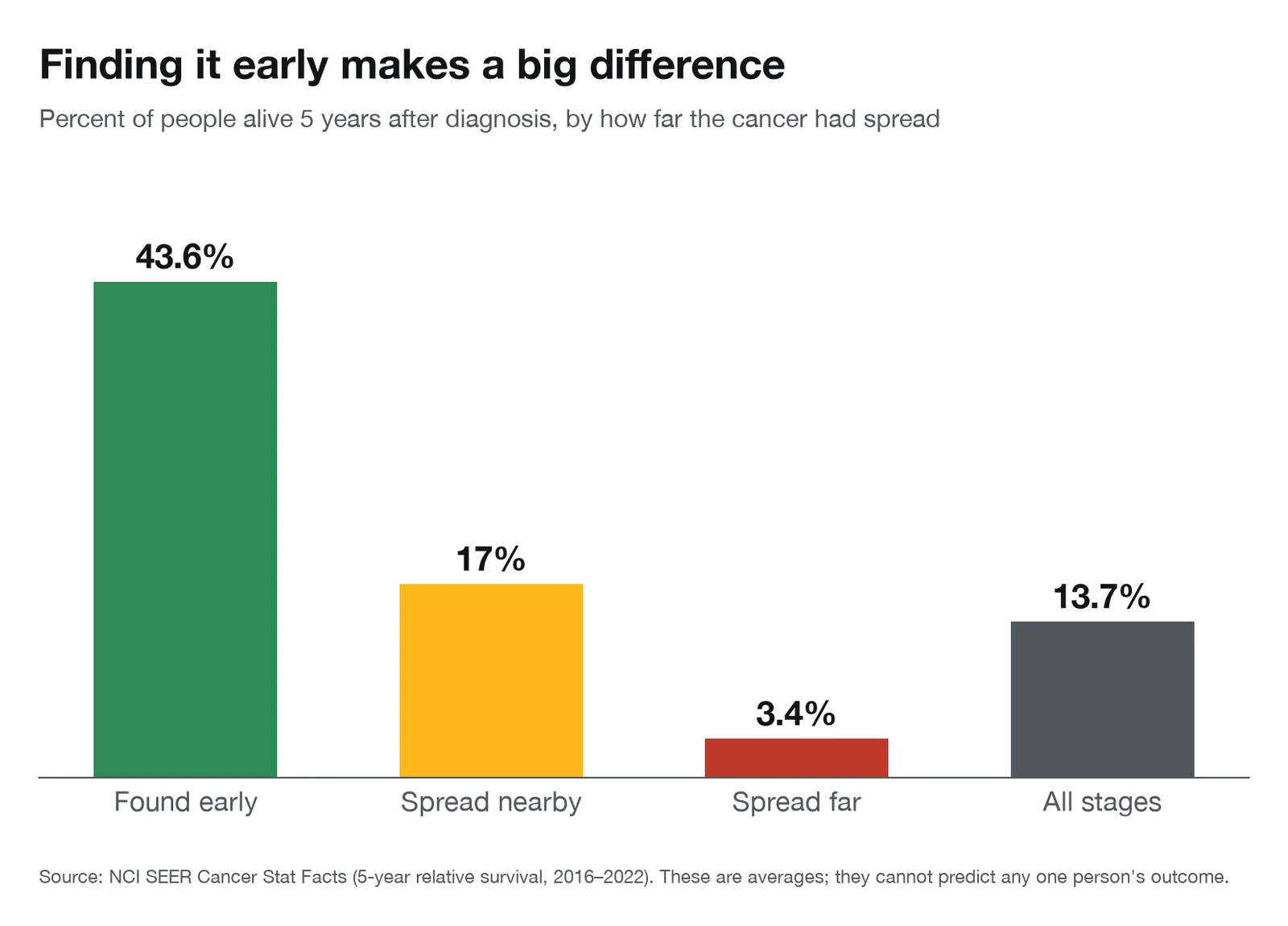
Look at what happens when it's caught early. Over 4 in 10 people whose cancer is found before it spreads are alive five years later. Once it has spread far, that falls to about 3 in 100.
What raises the risk?
Cancer starts when changes pile up in a cell's genes until the cell grows out of control. In pancreatic cancer, a gene called KRAS is changed in almost every tumor. Most of these changes happen by chance as we get older, but some things make them more likely.
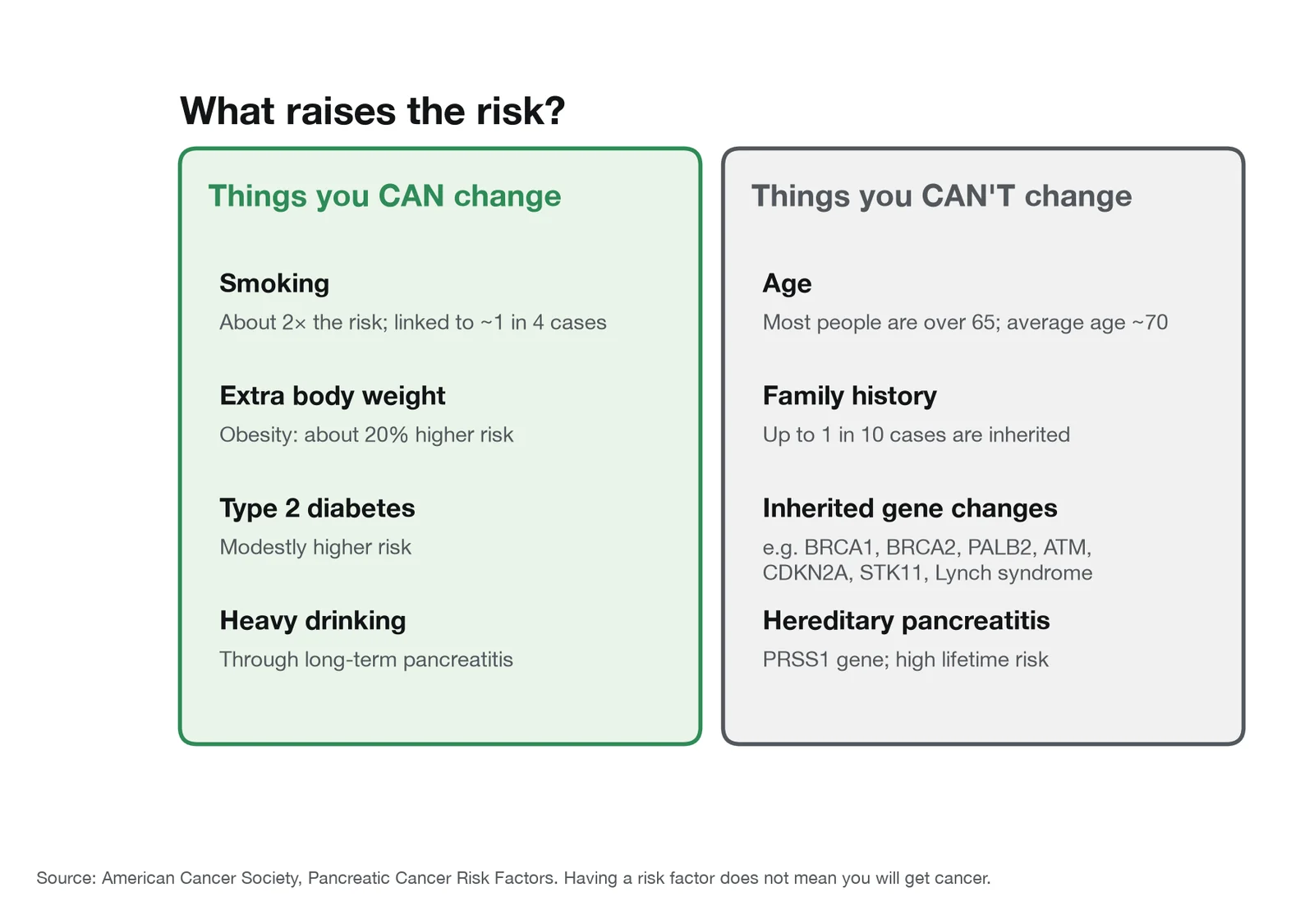
Risks you can change
Smoking is the big one. People who smoke have about twice the risk of people who have never smoked, and smoking is linked to roughly 1 in 4 pancreatic cancers. The extra risk doesn't disappear the day you quit, but it falls steadily over the following years.
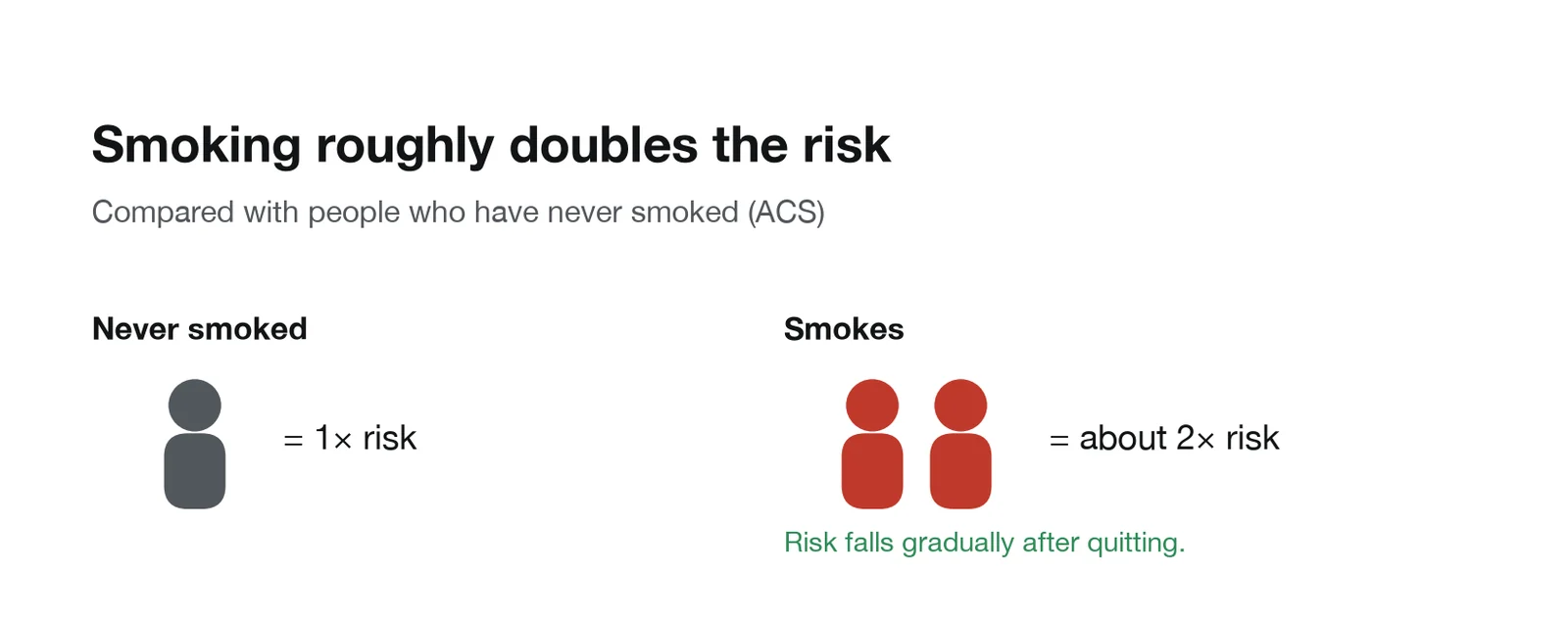
Weight matters too. People with obesity are about 20% more likely to get pancreatic cancer, and fat carried around the waist may count for more than overall weight. Long-standing type 2 diabetes raises the risk a little. So do years of inflammation in the pancreas (chronic pancreatitis), which is often caused by heavy drinking, sometimes together with smoking.
Risks you can't change
Age is the strongest of these. Most people diagnosed are over 65, and the average age at diagnosis is about 70.
Family history counts as well. If two or more of your close relatives have had pancreatic cancer, your own risk is higher, even when gene tests don't find a cause.
Up to 1 in 10 pancreatic cancers are linked to a gene change passed down in a family. Some of these genes are better known for other cancers: BRCA1 and BRCA2 for breast and ovarian cancer, for example. Others include PALB2, ATM, CDKN2A, STK11 (which causes Peutz-Jeghers syndrome) and the Lynch syndrome genes. There is also hereditary pancreatitis, a rare condition often caused by the PRSS1 gene. It brings repeated attacks of pancreatitis from a young age and a high lifetime risk of cancer.
Remember. A risk factor is not a diagnosis. Most people with these risk factors never get pancreatic cancer, and some people with none of them do.
Symptoms to look out for
Early pancreatic cancer usually causes no symptoms at all. When symptoms do show up, they depend a lot on which part of the pancreas the tumor is in.
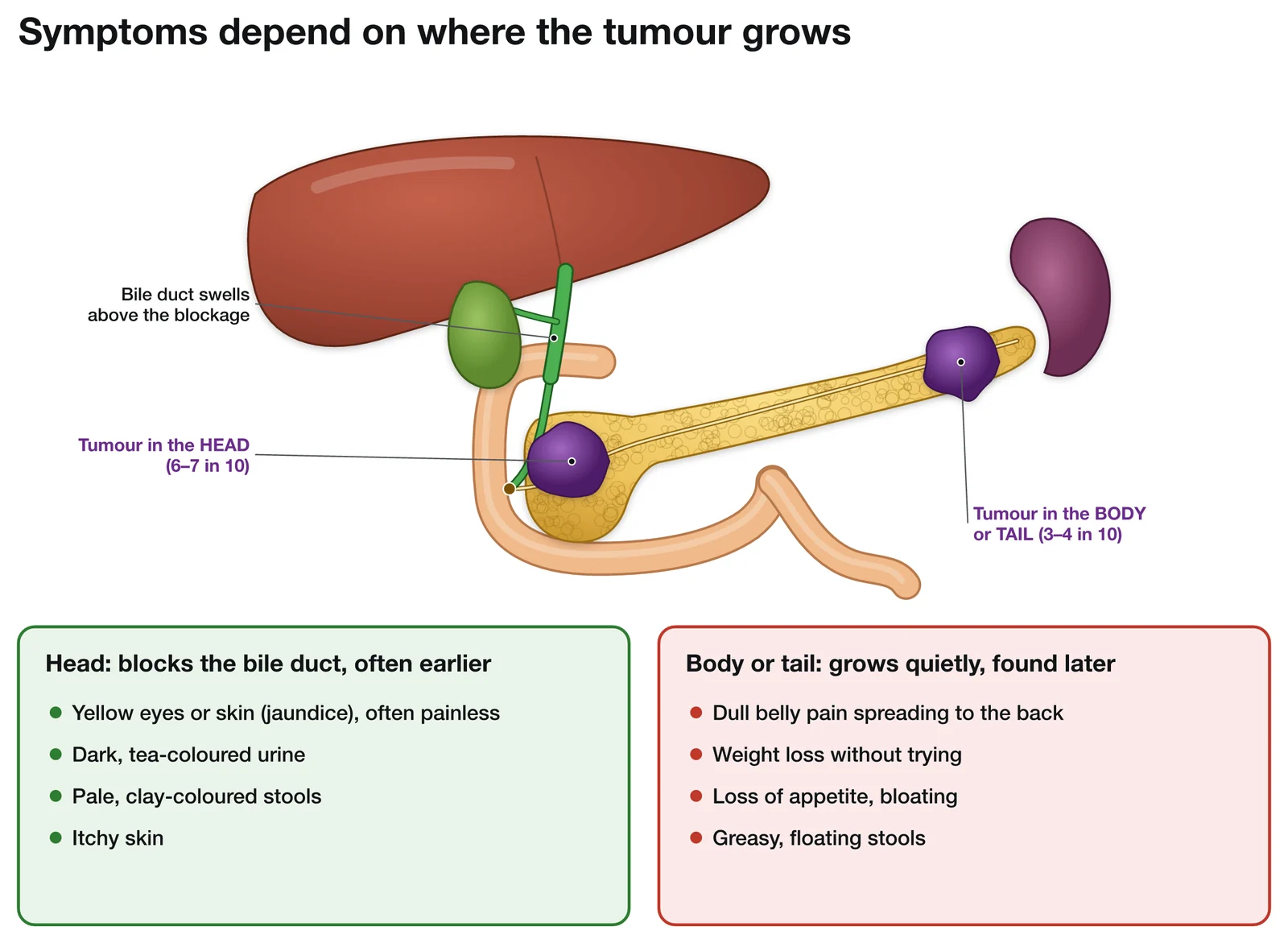
Tumors in the head of the pancreas
About 6 or 7 in every 10 tumors start in the head. The bile duct, which carries bile from the liver to the gut, runs right through this part, so even a small tumor can squeeze it shut. When that happens, you may notice:
- yellow eyes and skin (jaundice), often with no pain at all
- dark, tea-coloured urine
- pale, clay-coloured stools
- itchy skin
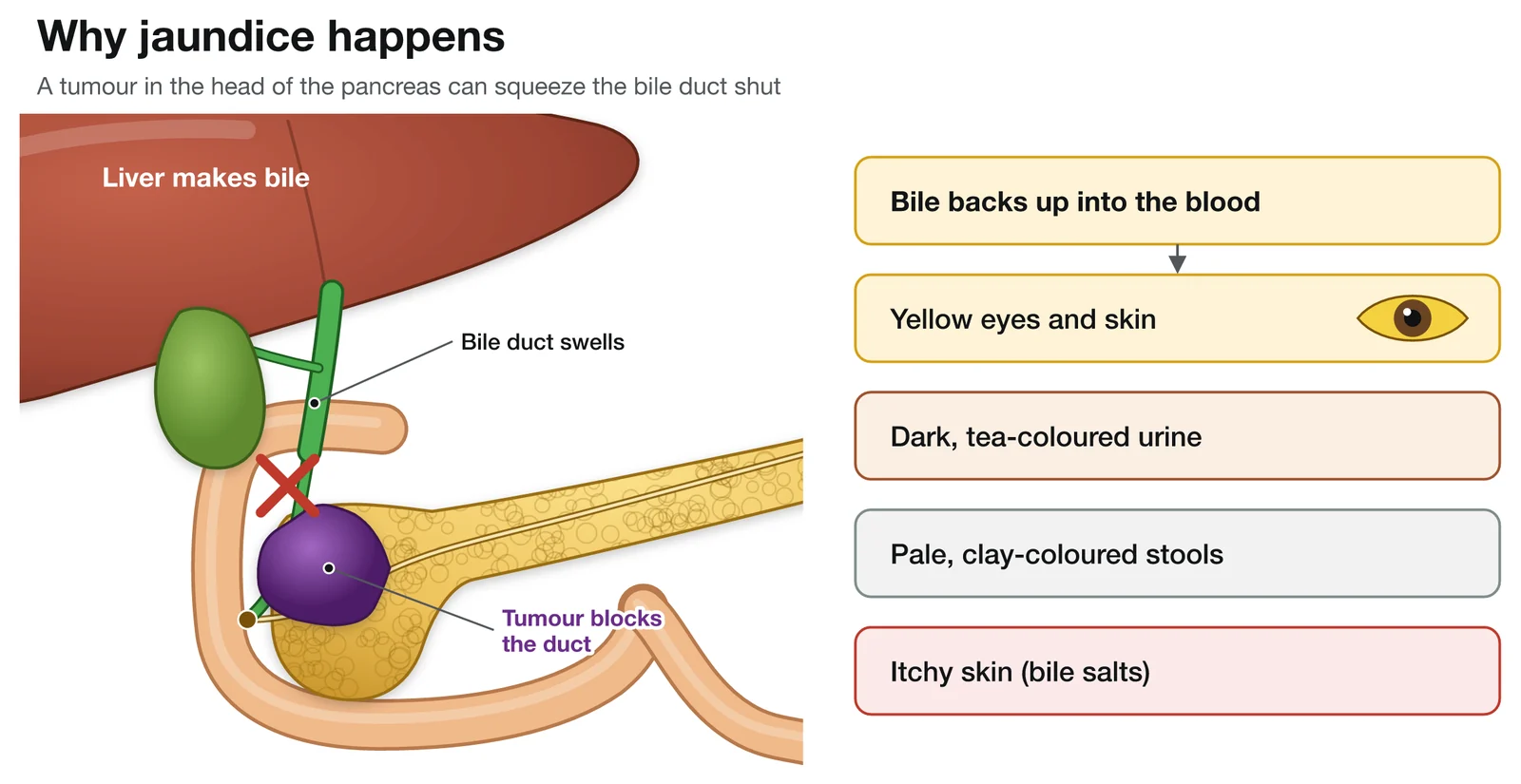
There is one small upside. Jaundice is hard to miss, so these tumors are sometimes found while they can still be removed.
Tumors in the body or tail
These tumors don't press on the bile duct, so they can grow quite large before anyone notices. The signs are vaguer:
- a dull ache in the upper belly that spreads to the back, often worse lying flat and easier when you sit up or lean forward
- losing weight without trying, and losing your appetite
- bloating, indigestion, or feeling full after a few bites
- pale, greasy, smelly stools that float and are hard to flush, because the pancreas can't release enough digestive juice
- new diabetes after 50 in someone without the usual risk factors, or diabetes that suddenly gets hard to control along with weight loss
| What you might notice | Earlier, subtle signs | Later, clearer signs |
|---|---|---|
| Skin, eyes and urine | Mild itching; urine slightly darker | Yellow eyes and skin; pale stools |
| Belly | Feeling full after meals; indigestion; bloating | Constant pain in the upper belly that spreads to the back |
| Weight and energy | Some weight loss; eating less | Major weight loss and muscle wasting; deep tiredness |
| Bowels | Occasional loose stools; trouble with fatty food | Greasy, floating, smelly stools; nausea |
| Blood sugar | Slightly higher sugar on routine tests | New diabetes after 50 without the usual causes; sugar hard to control |
Please don't panic. Gallstones, ulcers and irritable bowel cause most of these symptoms far more often than cancer does. Still, if a symptom won't go away, get it checked. If you ever notice jaundice, see a doctor promptly.
How doctors find out
If your doctor thinks something may be wrong with your pancreas, the tests usually go in this order.
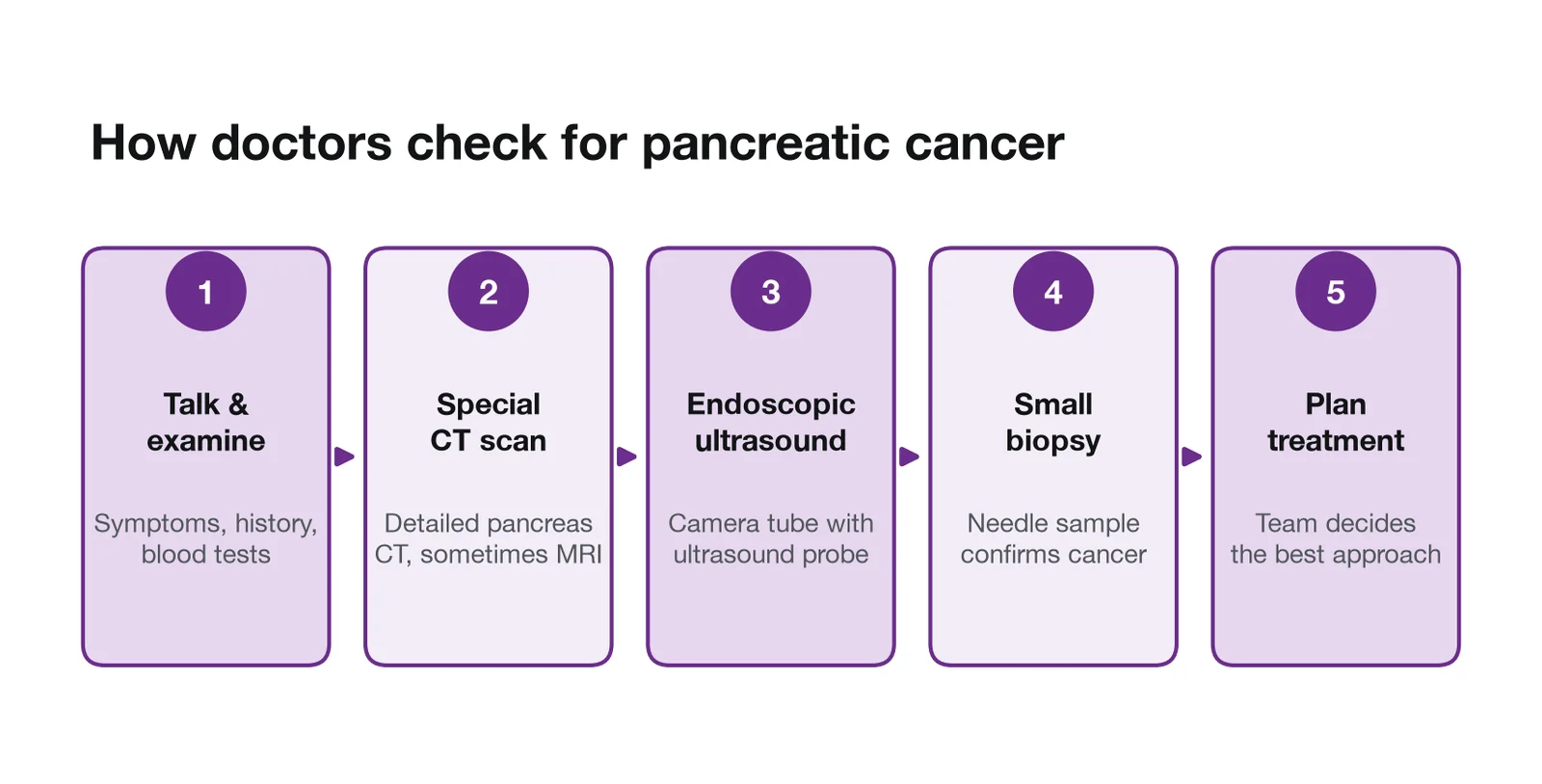
The first scan is usually a special CT, often called a pancreas-protocol CT. It takes detailed pictures as dye flows through your blood vessels, and shows how big the tumor is, how close it sits to the major blood vessels, and whether it has spread. An MRI uses magnets instead of X-rays. It is good at showing the ducts and small or fluid-filled (cystic) lumps, and it's an option for people who can't have CT dye.
For a closer look, doctors use endoscopic ultrasound, or EUS. You are sedated, and a thin, flexible tube with a tiny ultrasound probe on the end goes through your mouth into the stomach and the first part of the small intestine. From there the probe sits right next to the pancreas.
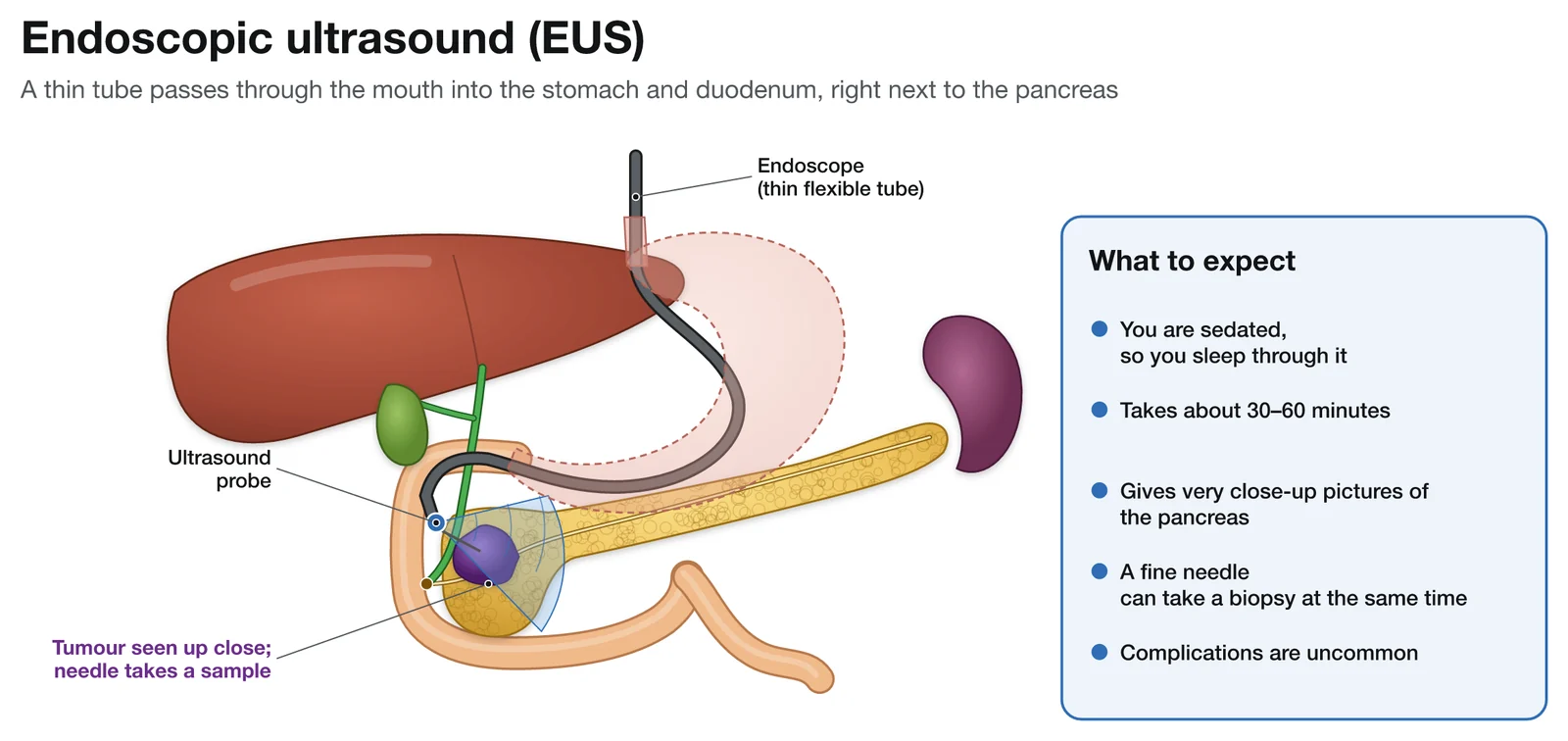
During the same EUS, a fine needle can take a small tissue sample (a biopsy). Looking at it under a microscope tells us whether it is cancer, and what type. A biopsy is usually done before chemotherapy or radiation, and complications are uncommon.
Can it be removed? (Staging)
Doctors still use the familiar cancer stages, 1 to 4. With pancreatic cancer we also sort tumors into four practical groups, mostly by how close they are to the big blood vessels behind the pancreas. That is what decides whether surgery is possible.
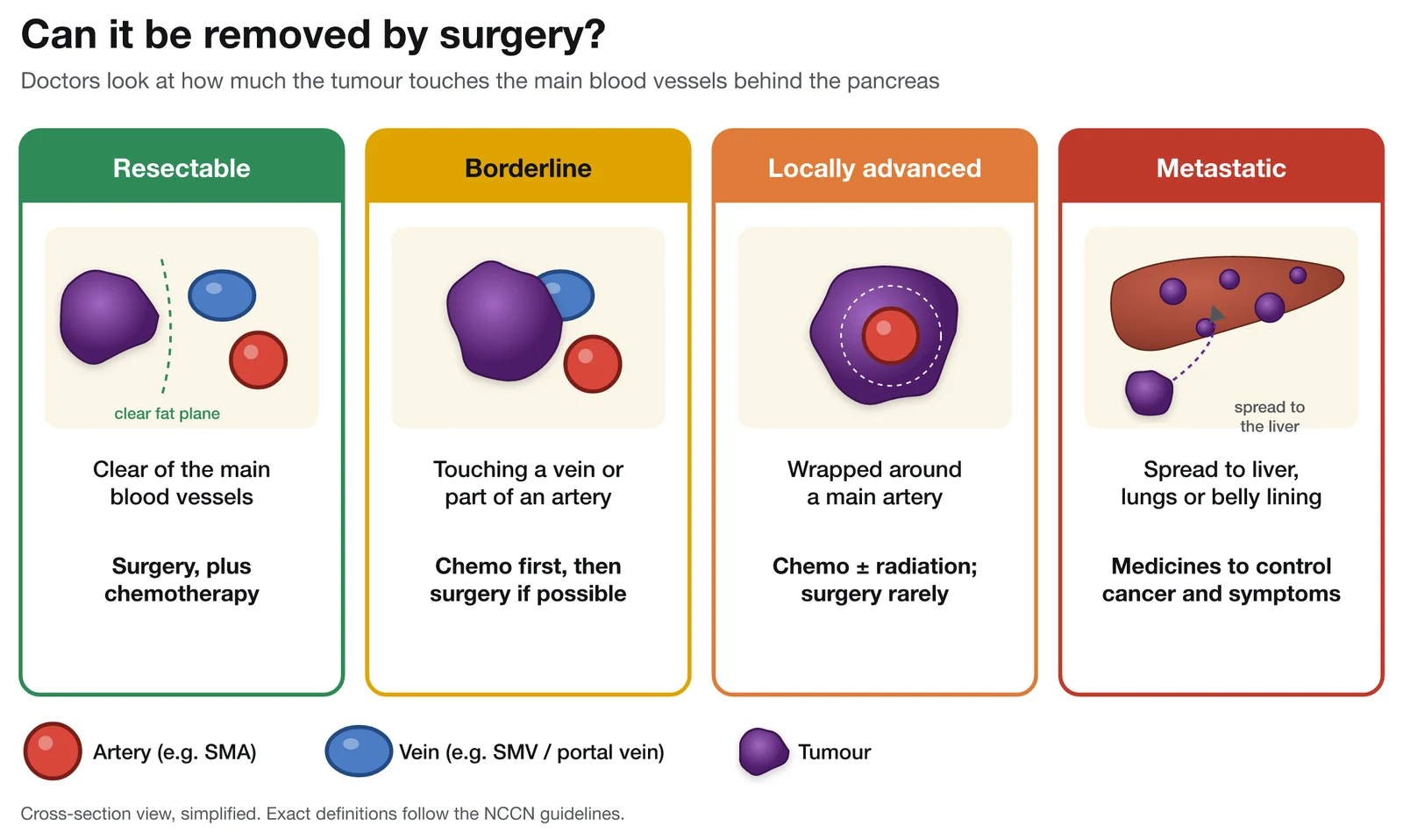
If the tumor is clear of the major blood vessels, it is called resectable, meaning a surgeon can remove it. A borderline resectable tumor touches some of the vessels. Chemotherapy usually comes first to shrink it, followed by surgery if that becomes possible.
A locally advanced tumor has wrapped around a major artery, so surgery usually isn't safe. Treatment is chemotherapy, sometimes with radiation. Metastatic, or stage 4, cancer has spread to other organs, most often the liver, the lungs or the lining of the belly. The aim then is to control the cancer, help you live longer and keep you feeling as well as possible.
Is there a screening test?
Not for everyone. The US Preventive Services Task Force advises against screening people at average risk. Pancreatic cancer is uncommon in the general population, so scanning everyone would turn up lots of harmless spots. That means worry, more tests and, for some people, surgery they never needed.
You may hear about a blood test called CA 19-9. It isn't good enough for screening. Harmless problems like gallstones can push it up, and about 5 to 10 people in 100 don't make it at all, even when they have cancer. Doctors mostly use it to see how treatment is working.
People at high risk are different. They may be offered regular checks at a specialist centre, usually an MRI or endoscopic ultrasound once a year, or both. The aim is to find a tumor, or the changes that come before one, while it can still be removed.
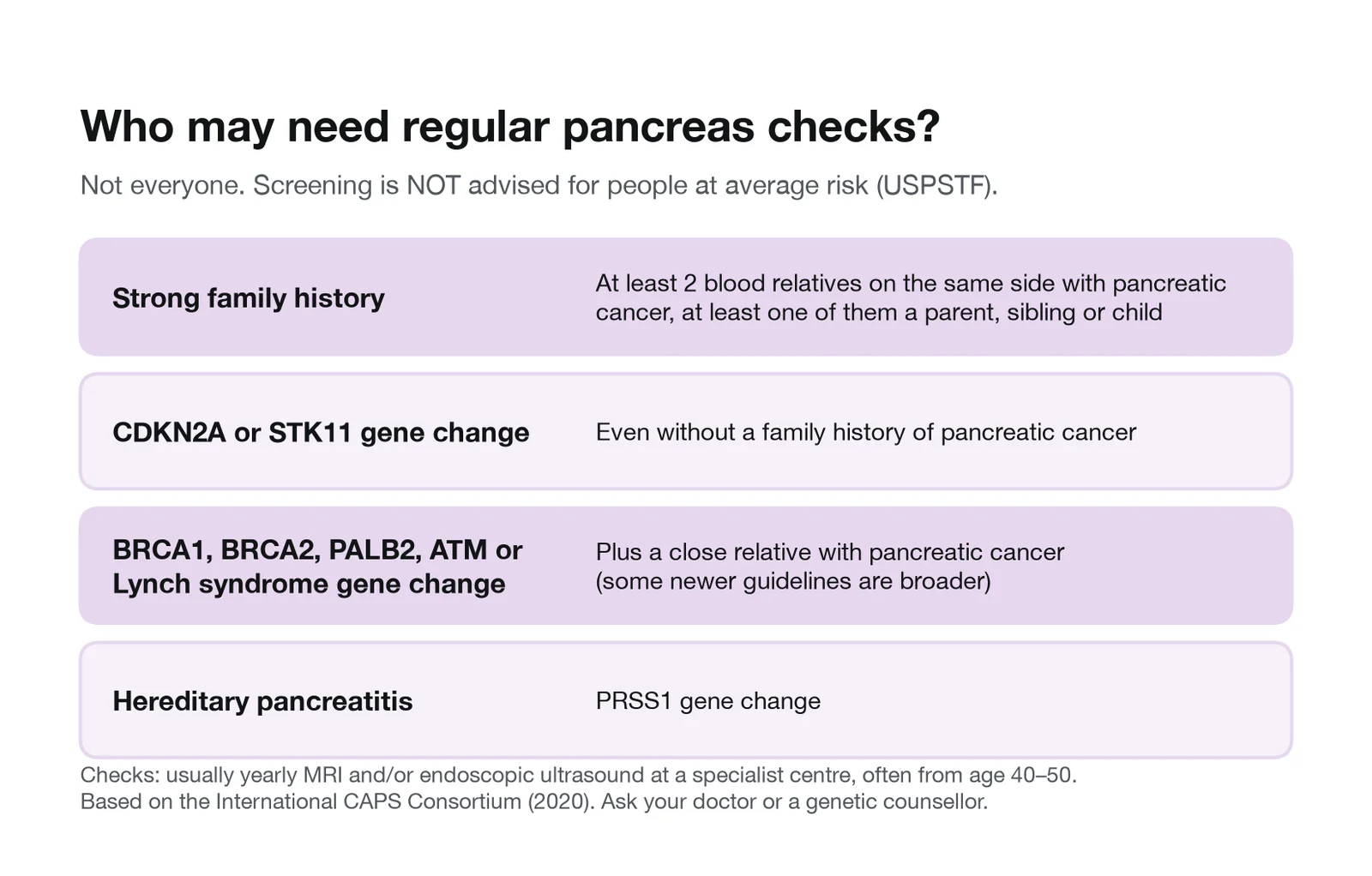
Should I be checked? If several relatives on one side of your family have had pancreatic, breast, ovarian, prostate or bowel cancer, tell your doctor. They may refer you to a genetic counsellor, who can work out whether gene testing or regular checks make sense for you.
How pancreatic cancer is treated
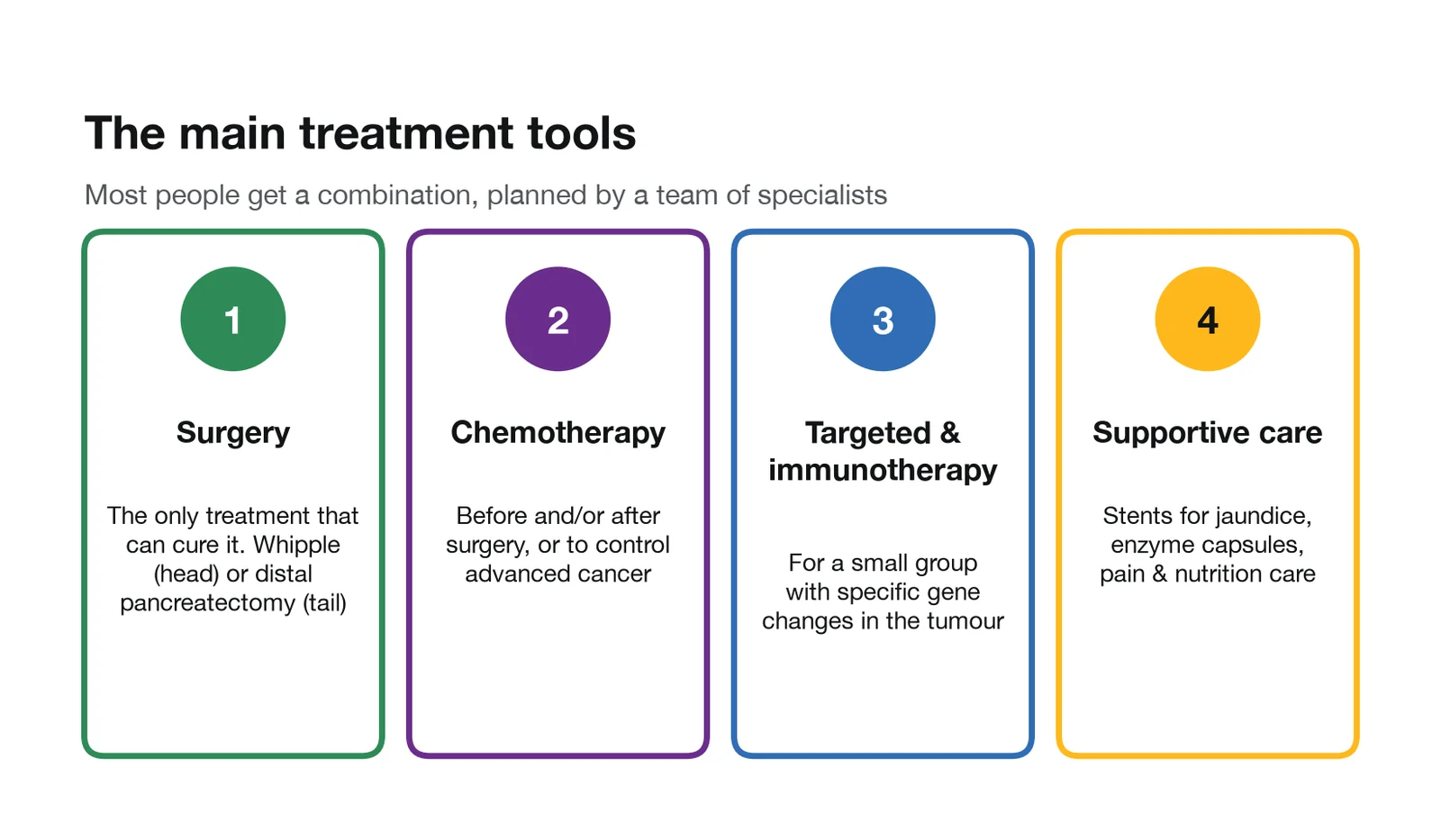
No single doctor handles this alone. Your plan is put together by a team that usually includes a surgeon, a medical oncologist, a radiation oncologist, a gastroenterologist, specialist nurses, a dietitian and palliative care doctors. Most people get more than one kind of treatment.
Surgery
Surgery is the only treatment that can cure pancreatic cancer. It is only an option when the cancer is found before it has spread.
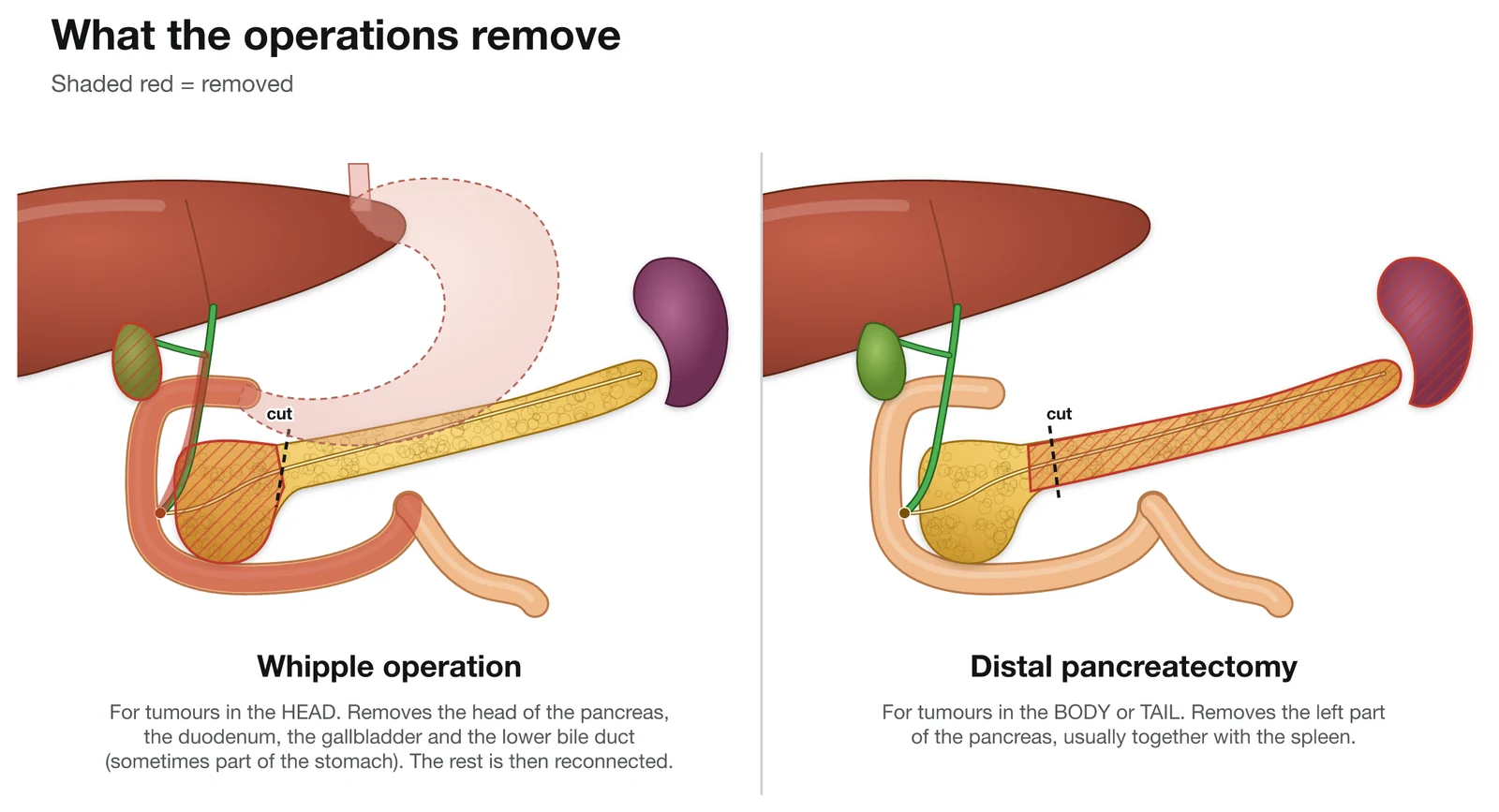
Tumors in the head are removed with a Whipple operation. The surgeon takes out the head of the pancreas, the first part of the small intestine, the gallbladder and part of the bile duct, then joins the digestive system back together. It is a big operation, and it's best done at a centre that performs a lot of them. Tumors in the body or tail need a distal pancreatectomy, which removes the left part of the pancreas, usually together with the spleen.
Chemotherapy
Even when surgery removes every bit of cancer the surgeon can see, tiny amounts may already have spread. That's why chemotherapy is part of almost every treatment plan.
After surgery (adjuvant treatment), most people get about six months of chemotherapy. For those fit enough, the preferred combination is called mFOLFIRINOX. In a large trial, about 43 in 100 people given it were alive five years later, compared with about 31 in 100 given an older single drug. Gemcitabine with capecitabine is a common alternative for people who can't have mFOLFIRINOX.
Chemotherapy is also given more and more often before surgery (neoadjuvant treatment), especially for borderline tumors. It can shrink the cancer, makes it more likely the surgeon can remove all of it, and shows early on whether the cancer responds. For advanced cancer, chemotherapy can slow it down, ease symptoms and help people live longer.
Targeted treatment and immunotherapy
Guidelines now recommend that everyone with pancreatic cancer is offered a blood or saliva test for inherited gene changes. People with advanced cancer should also have their tumor's genes tested. For a small group, the results open up more precise treatment.
Someone with an inherited BRCA1 or BRCA2 change whose advanced cancer has stayed stable on platinum chemotherapy may take a tablet called olaparib to keep it under control for longer. About 1 in 100 tumors have a feature called MSI-high or dMMR, and these may respond well to immunotherapy such as pembrolizumab. A few rare gene changes, such as NTRK fusions, can be treated with targeted tablets made for that change.
Supportive care
Supportive (palliative) care is about comfort and quality of life. Many people think it's only for the last weeks of life, but it can start at diagnosis, alongside cancer treatment, and in most cases it should.
If a tumor is blocking the bile duct, a small tube called a stent can be placed during an endoscopy to open it again, which clears the jaundice and itching. Enzyme capsules taken with meals replace the digestive juices the pancreas can no longer make, and they help with greasy stools, bloating and weight loss. A dietitian can help you keep your strength up.
Pain can usually be controlled with medicines. Some people also benefit from a nerve block (a celiac plexus block), which quiets the nerves that carry pain from the pancreas.
What you can do today
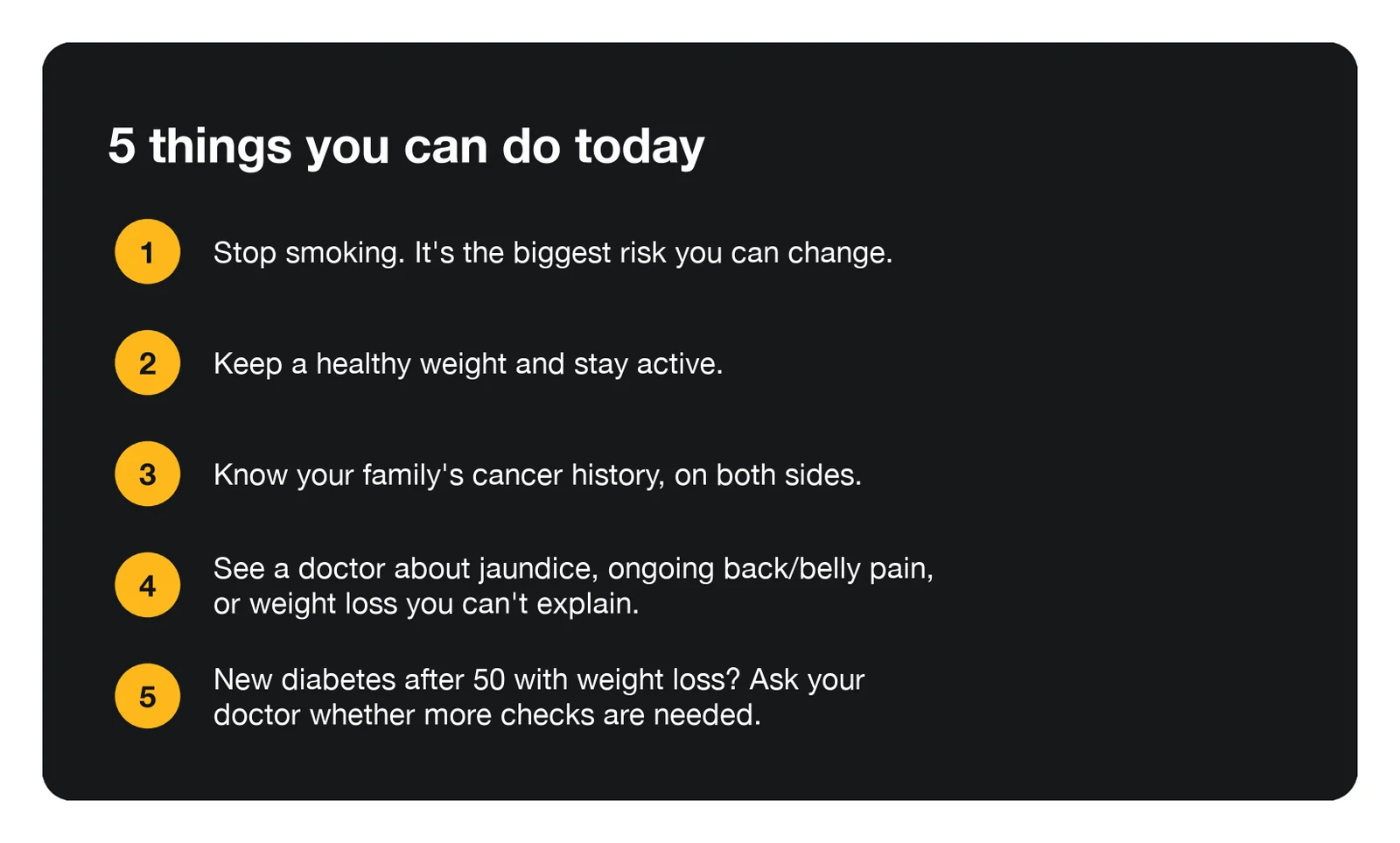
- Stop smoking. For pancreatic cancer it's the single biggest risk you can change, and it lowers your risk of many other cancers too. Ask your doctor for help quitting. Support and medicines work better than willpower alone. Read more in Smoking and cancer.
- Keep to a healthy weight. Eat plenty of vegetables, fruit and whole grains, and stay active.
- Learn your family history. Write down which relatives on both sides had cancer, what type, and how old they were. Then share it with your doctor.
- Take warning signs seriously. Yellow eyes or skin, belly or back pain that won't go away, weight loss you can't explain, or ongoing changes in your stools all deserve a visit to the doctor.
- Mention new diabetes. If you develop diabetes after 50 without the usual causes, especially if you're also losing weight, ask your doctor whether you need more tests.
None of this guarantees you won't get pancreatic cancer. It does make it more likely that, if it ever happens, it gets found while there are still good options on the table.
More patient guides: Breast cancer: early signs, risk factors, screening and treatment · Smoking and cancer
Sources: National Cancer Institute, SEER Cancer Stat Facts: Pancreatic Cancer (2026 estimates; survival 2016 to 2022); National Cancer Institute, Pancreatic Cancer Symptoms; American Cancer Society, Pancreatic Cancer Risk Factors; US Preventive Services Task Force, Screening for Pancreatic Cancer (2019); Rahib L, et al., Estimated projection of US cancer incidence and death to 2040, JAMA Network Open 2021; Goggins M, et al., Management of patients with increased risk for familial pancreatic cancer (International CAPS Consortium), Gut 2020;69:7–17; Khorana AA, et al., Potentially curable pancreatic adenocarcinoma: ASCO guideline update, Journal of Clinical Oncology 2019; Conroy T, et al., Five-year outcomes of FOLFIRINOX vs gemcitabine as adjuvant therapy for pancreatic cancer (PRODIGE 24), JAMA Oncology 2022; NCCN Clinical Practice Guidelines: Pancreatic Adenocarcinoma.