
Breast cancer: early signs, risk factors, screening and treatment
Breast cancer is the most common cancer in women worldwide. The World Health Organization estimates that about 2.4 million women were diagnosed with it in one year, and about 694,000 died from it. It accounts for roughly one in four cancers diagnosed in women.
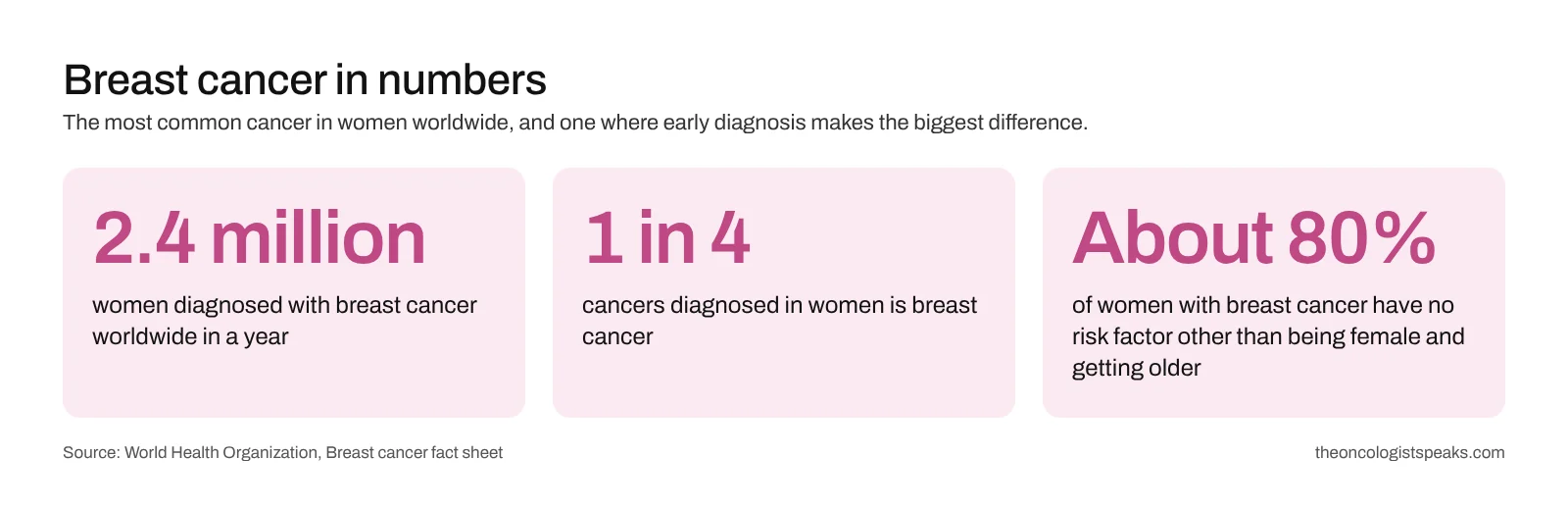
Those numbers are large, but the outlook has improved. Death rates have fallen steadily over the last few decades in countries where women are screened regularly, diagnosed early and treated with modern therapy. Early diagnosis matters more than anything else on this page. A cancer found while it is small and still in the breast is far easier to treat than one that has spread.
This guide explains who is at risk, which changes to look out for, how screening works and what treatment involves. It is written for patients, families and anyone who wants to look after their breast health.
1. What raises the risk of breast cancer?
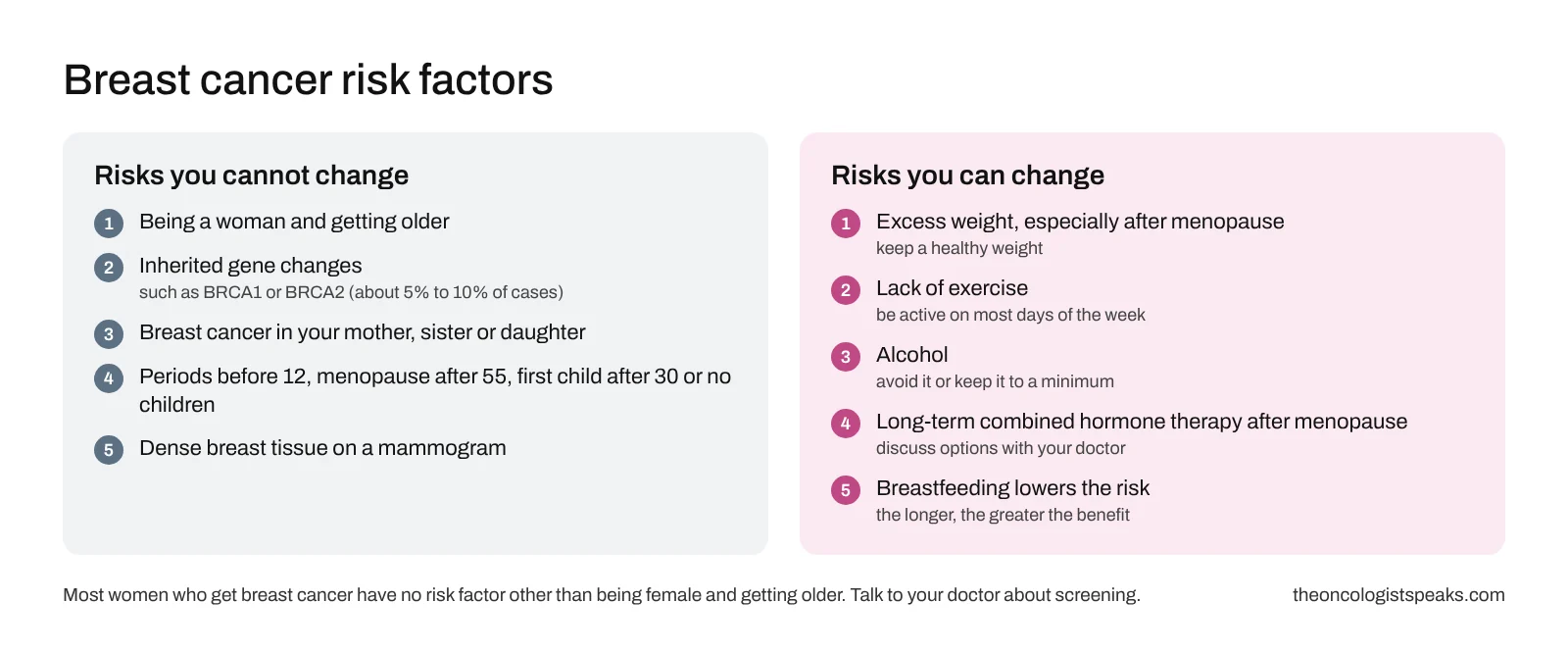
Some risk factors come from your biology and cannot be changed. Others depend on daily habits, and you can do something about them. It is worth knowing both, but keep one fact in mind: most women who develop breast cancer have no risk factor other than being a woman and getting older. WHO puts this at about 80% of cases. Having no risk factors does not mean you are safe, and having some does not mean you will get cancer.
Risk factors you cannot change
Talk to your doctor about these, because they can change when you should start screening and which tests you need.
- Being female and getting older. Men can get breast cancer, but it is rare. In women, the risk rises steadily with age.
- Inherited gene changes. About 5% to 10% of breast cancers are caused by a gene change passed down in the family. Changes in the BRCA1 and BRCA2 genes raise lifetime risk the most.
- Family history. If your mother, sister or daughter has had breast cancer, your own risk is higher, even when no gene change has been found.
- Your reproductive history. Estrogen, a hormone your body makes, stimulates breast tissue. The longer your body is exposed to it, the higher the risk. Periods that start before age 12, menopause after 55, a first child after 30, or never having children all raise the risk slightly. Breastfeeding, especially for longer periods, lowers it.
- Dense breasts. On a mammogram, dense breasts have more glandular and fibrous tissue than fat. Women with dense breasts have a higher risk, and they may need an extra scan because dense tissue can hide a tumor on a mammogram.
Risk factors you can change
Excess weight
After menopause, fat tissue becomes the main source of estrogen. Obesity at this age raises breast cancer risk about 1.5 to 2.5 times.
What you can do: keep a healthy weight with balanced meals and daily movement.
Lack of exercise
Sitting most of the day raises risk. Regular exercise lowers it by about 12% to 21%.
What you can do: do moderate or vigorous exercise on most days of the week.
Alcohol
Risk goes up with every drink. The more you drink, the higher it climbs.
What you can do: avoid alcohol, or keep it to a minimum.
Hormone replacement therapy (HRT)
Taking combined estrogen and progestin for a long time after menopause raises risk.
What you can do: ask your doctor about non-hormonal options, or use HRT at the lowest dose for the shortest time.
2. Early signs of breast cancer
Many early breast cancers cause no symptoms at all and are found only on a screening mammogram. That is why screening matters even when you feel well. Still, see a doctor promptly if you notice any of these changes:
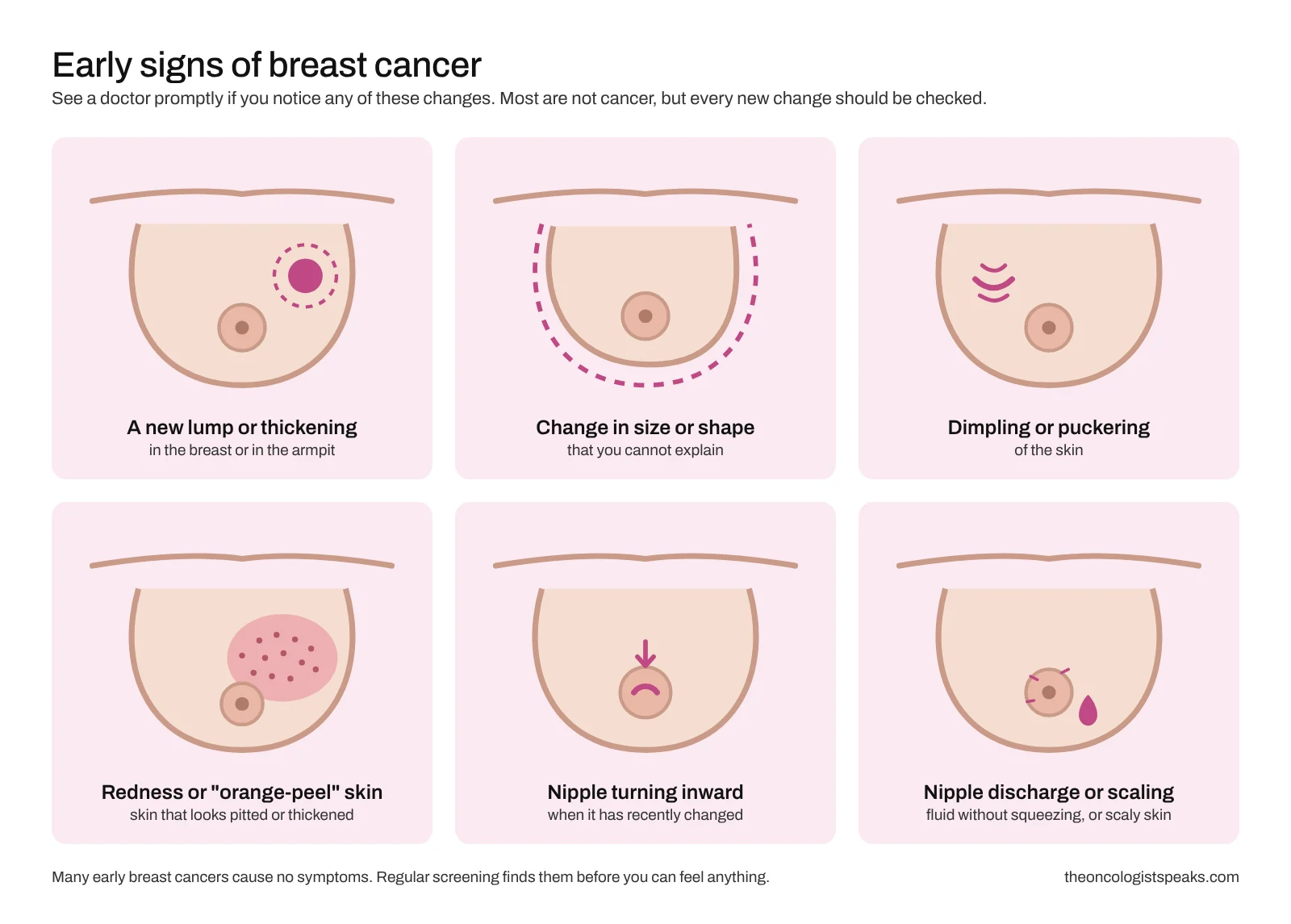
- A new lump or thickening in the breast or in the armpit.
- A change in the size or shape of a breast that you cannot explain.
- Skin changes on the breast: dimpling, puckering, redness, or skin that looks like orange peel.
- Changes in the nipple: a nipple that has recently turned inward, scaly skin on the nipple, or fluid coming out of the nipple without squeezing.
Most breast lumps are not cancer. But only a doctor can tell, usually with an examination and a scan, so do not wait to see whether a lump goes away.
3. Breast cancer screening: which tests and when
Screening looks for cancer before you notice anything wrong. These are the main options:
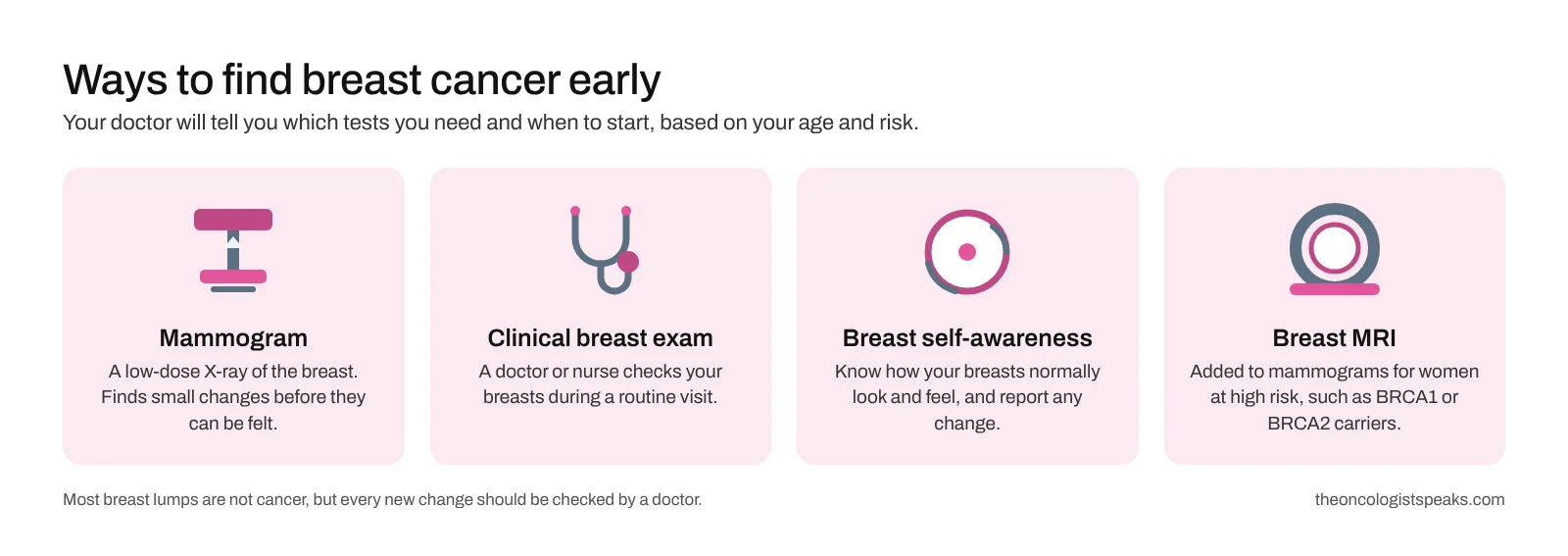
- Screening mammogram. A low-dose X-ray of the breast. It is the main screening test for women in general and can show tiny calcium deposits or small masses long before they can be felt.
- Clinical breast examination. A trained doctor or nurse examines your breasts during a routine checkup.
- Breast self-awareness. Get to know how your breasts normally look and feel, so you notice changes early and report them.
- Breast MRI. For women at high risk, such as those with a BRCA1 or BRCA2 gene change, doctors recommend an MRI scan in addition to the mammogram.
When to start and how often to be screened depends on your age, your family history and your personal risk. Your doctor can work this out with you.
4. How breast cancer is treated
Treatment is planned for each person. Doctors from several specialties (surgery, radiation and medical oncology) work together, and the plan depends on three main things: the stage of the cancer, whether the cancer cells have hormone receptors (estrogen and progesterone receptors), and whether they make a protein called HER2.
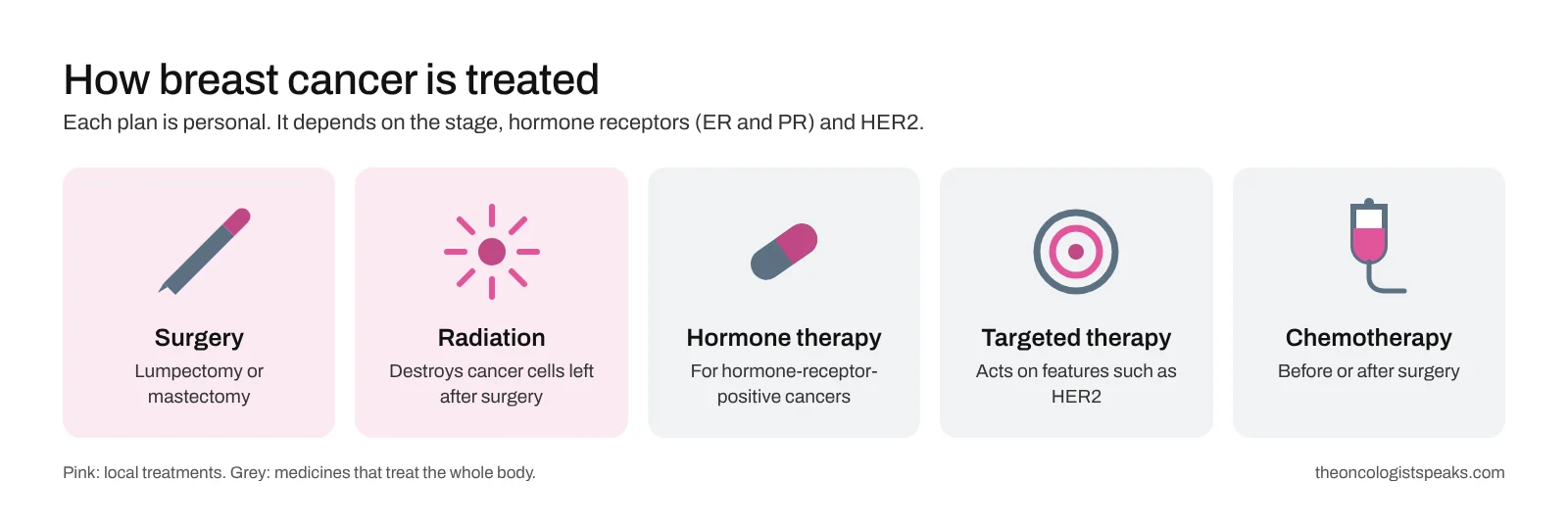
- Surgery. In a lumpectomy (breast-conserving surgery), the surgeon removes only the tumor with a margin of healthy tissue. In a mastectomy, the breast tissue is removed. When each is combined with the right additional treatment, long-term survival is the same.
- Radiation therapy. High-energy rays destroy any cancer cells left in the breast after a lumpectomy. It is also used after a mastectomy in some cases.
Medicines that treat the whole body
- Hormone therapy, such as tamoxifen or aromatase inhibitors, for cancers that grow in response to hormones. These medicines block estrogen or lower the amount the body makes.
- Targeted therapy, which acts on a specific feature of the cancer cells, such as HER2.
- Chemotherapy, given before surgery to shrink the tumor or after surgery to kill cancer cells that may have spread.
5. What you can do today
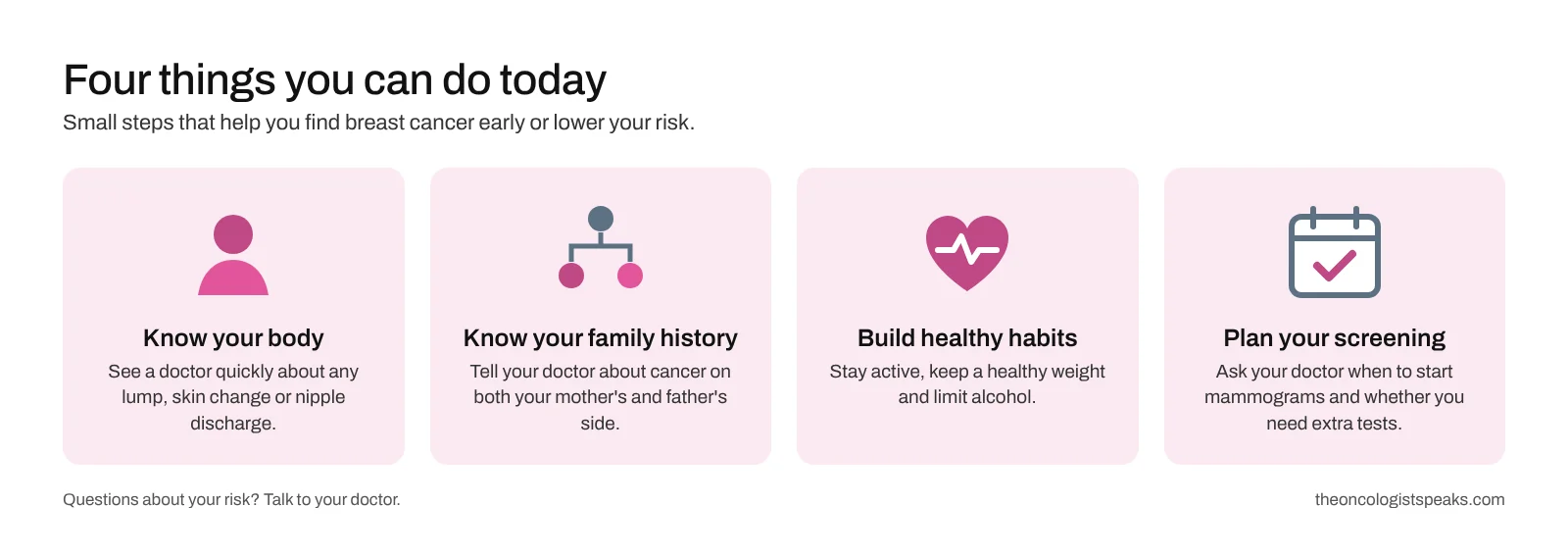
- Know your body. Notice how your breasts normally look and feel. If you find a lump, a skin change or nipple discharge, see a doctor straight away.
- Know your family history. Tell your doctor about cancer in relatives on both your mother's and your father's side.
- Build healthy habits. Stay active, keep a healthy weight (especially after menopause), eat a varied diet and limit alcohol.
- Plan your screening. Ask your doctor when you should start mammograms and whether a genetic test or other risk assessment makes sense for you.
Frequently asked questions
What is the first sign of breast cancer?
Often there is no sign at all, and the cancer is found on a mammogram. When there is a sign, the most common one is a new lump or thickening in the breast or armpit.
Is every breast lump cancer?
No. Most breast lumps are not cancer, but every new lump should be checked by a doctor.
Can men get breast cancer?
Yes, but it is rare.
Does breastfeeding protect against breast cancer?
Breastfeeding slightly lowers the risk, and the longer you breastfeed, the greater the benefit.
Who needs a breast MRI?
Women at high risk, such as carriers of a BRCA1 or BRCA2 gene change, are advised to have an MRI in addition to their mammogram.
Is breast cancer curable?
Breast cancer found at an early stage is much easier to treat successfully, which is why early detection and regular screening matter so much.
Source for global figures: World Health Organization, Breast cancer fact sheet.