
Smoking and cancer: how tobacco harms you, and why quitting helps even after a cancer diagnosis
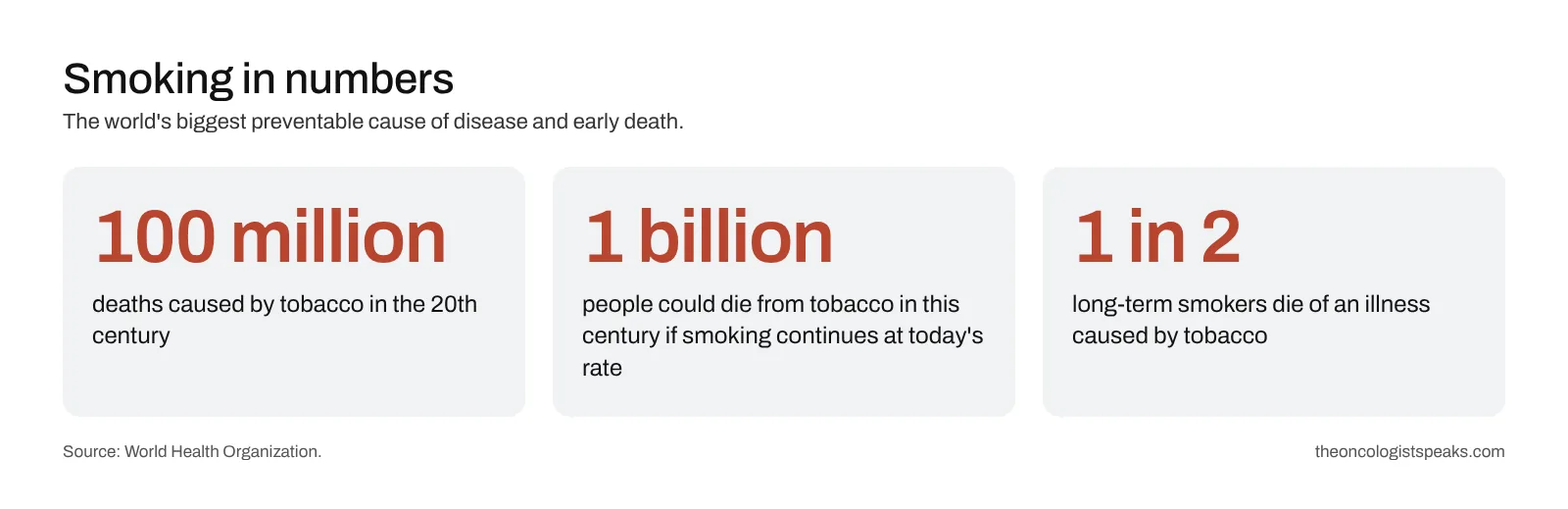
Smoking is the biggest cause of disease and early death in the world that we can prevent. According to the World Health Organization, tobacco killed about 100 million people in the 20th century. If people keep smoking the way they do now, it could kill up to 1 billion people in this century.
About half of people who smoke for many years die of an illness caused by tobacco. The cost is not only human. Treating these illnesses, and the work lost when people fall sick or die early, costs the world more than 1 trillion US dollars every year.
This guide explains which cancers smoking causes, what smoking does to people who already have cancer, and why stopping helps at any stage. It is written for patients, families and anyone who smokes or wants to help someone quit.
1. Which cancers does smoking cause?
Tobacco smoke carries harmful chemicals into the lungs. From there they travel in the blood to almost every part of the body. That is why smoking causes cancer in many organs, not only in the lungs.
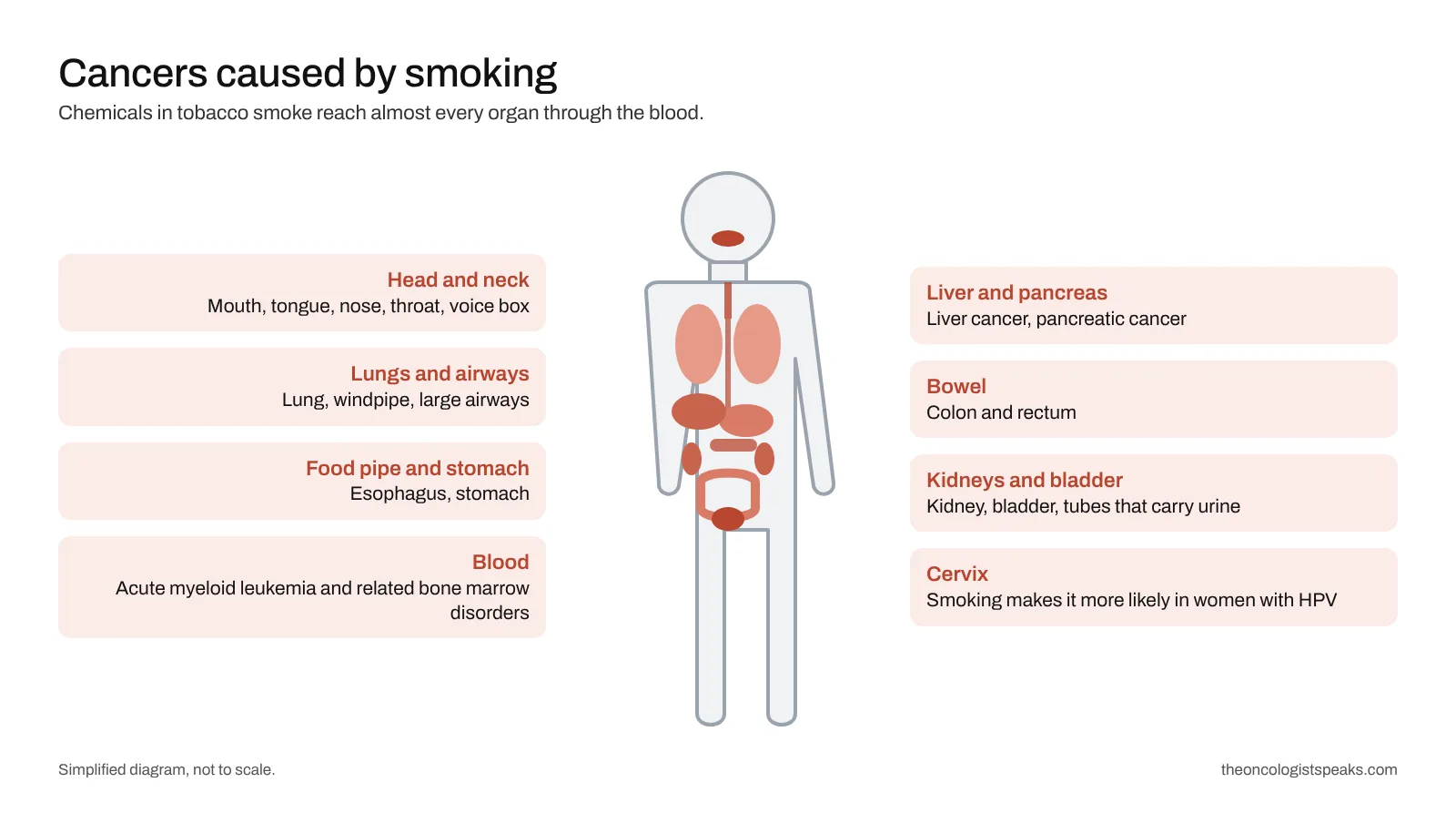
- Lungs and airways. Lung cancer of all main types, and cancer of the windpipe and the large airways.
- Head and neck. Cancer of the lips, tongue, gums, inside of the cheeks, floor of the mouth, nose and throat, and the voice box.
- Digestive system. Cancer of the food pipe, stomach, pancreas, liver and large bowel.
- Kidneys and bladder. Cancer of the bladder, the kidneys and the tubes that carry urine. Smoking also makes cancer of the cervix more likely in women who have the HPV virus.
- Blood and bone marrow. A type of leukemia called acute myeloid leukemia (AML), and related bone marrow disorders. Benzene, a chemical in tobacco smoke, damages the cells in the bone marrow that make blood.
2. Smoking after a cancer diagnosis
When you come for cancer treatment, your doctor will ask about smoking. Doctors put patients into one of four groups:
| Group | What it means |
|---|---|
| Never smoked | Smoked fewer than 100 cigarettes in your whole life |
| Former smoker | Stopped more than 1 year ago |
| Recently quit | Stopped between 1 week and 1 year ago |
| Current smoker | Smokes every day or on some days |
This matters because smoking during cancer treatment makes almost every type of cancer and every type of treatment do worse. The US Surgeon General's reports, which pull together decades of research, conclude that smoking in people with cancer causes more deaths, both from cancer and from other illnesses, and more new cancers.
Here is what the research shows for people with cancer who keep smoking:
Higher risk of death
Reviews of more than 120 studies, covering more than 490,000 patients with cancer, found that current smokers had a 61% higher risk of dying than people who never smoked or had stopped. Patients who kept smoking after their diagnosis had more than double the risk (119% higher).
The cancer is more likely to come back
Current smoking raised the risk of the cancer returning by 42%. In former smokers the rise was only 15%.
A second, new cancer is more likely
Current smokers were 2.2 times as likely to develop a second, different cancer. Former smokers were 1.2 times as likely.
The risk climbs much higher when smoking is combined with cancer treatment. Women treated with radiation for one common type of breast cancer who kept smoking had 9 times the risk of cancer in the other breast. People treated for Hodgkin lymphoma who smoked heavily and received chemotherapy and radiation had 17 to 49 times the risk of lung cancer later.
3. How smoking makes cancer treatment harder
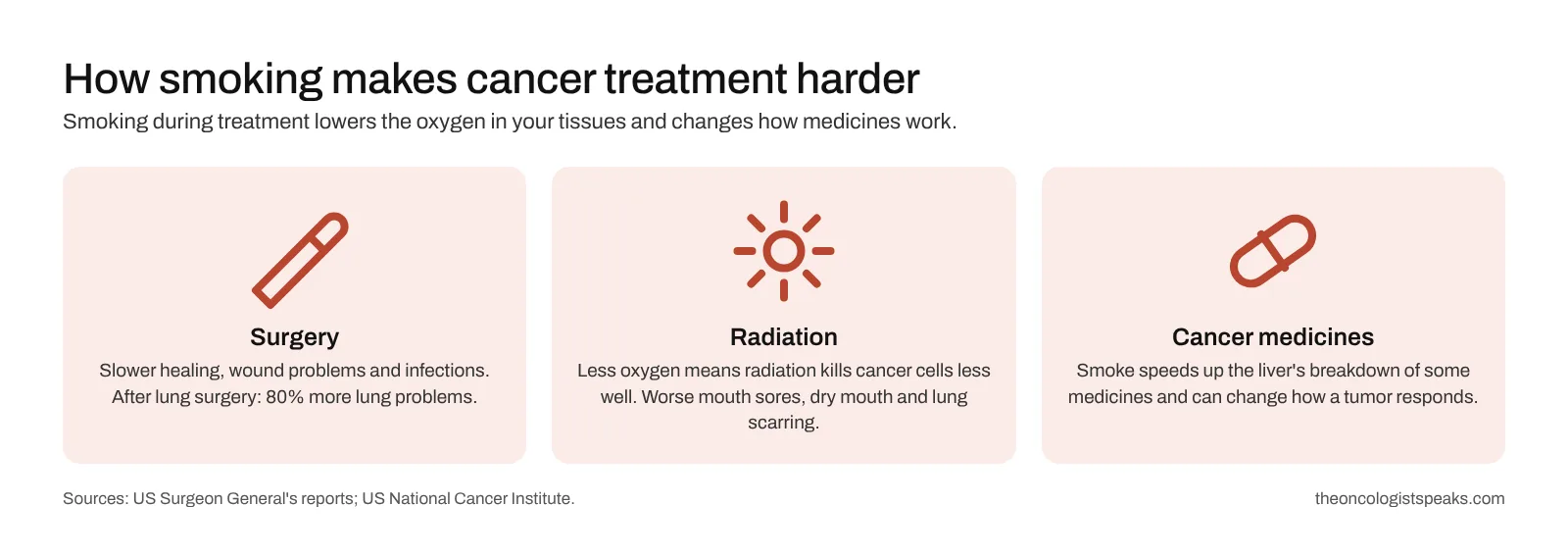
- Surgery. Smoking lowers the oxygen in your tissues, narrows small blood vessels and slows healing. Patients who smoke are much more likely to have wounds that open up, skin flaps that die, infections, longer hospital stays and death within 30 days of the operation. After lung surgery, smokers have 80% more lung problems, such as collapsed lung tissue, pneumonia and needing a breathing machine for longer. Their risk of dying in hospital is 3.5 times higher.
- Radiation therapy. Cigarette smoke contains carbon monoxide, which lowers the oxygen in your tissues. Radiation needs oxygen to kill cancer cells well, so it works less well. Smoking also makes side effects worse: painful mouth sores, inflammation and scarring of the lungs, dry mouth, and lasting damage to the treated skin and tissue.
- Cancer medicines. Chemicals in smoke speed up the liver enzymes that break down some medicines. This can change how much of a cancer medicine stays in your body and how well it works. Lung cancers in people who never smoked more often carry certain gene changes (such as EGFR or ALK) that targeted medicines can treat. Smoking changes the make-up of a tumor, and this can change how it responds to immunotherapy.
Treatment that fails because a patient keeps smoking is also expensive. In the United States alone, it is estimated to add about 3.4 billion US dollars a year to cancer treatment costs.
4. Quitting helps, even after a cancer diagnosis
Stopping smoking after a cancer diagnosis is one of the most useful things a patient can do. It helps people live longer, lowers side effects and improves quality of life.
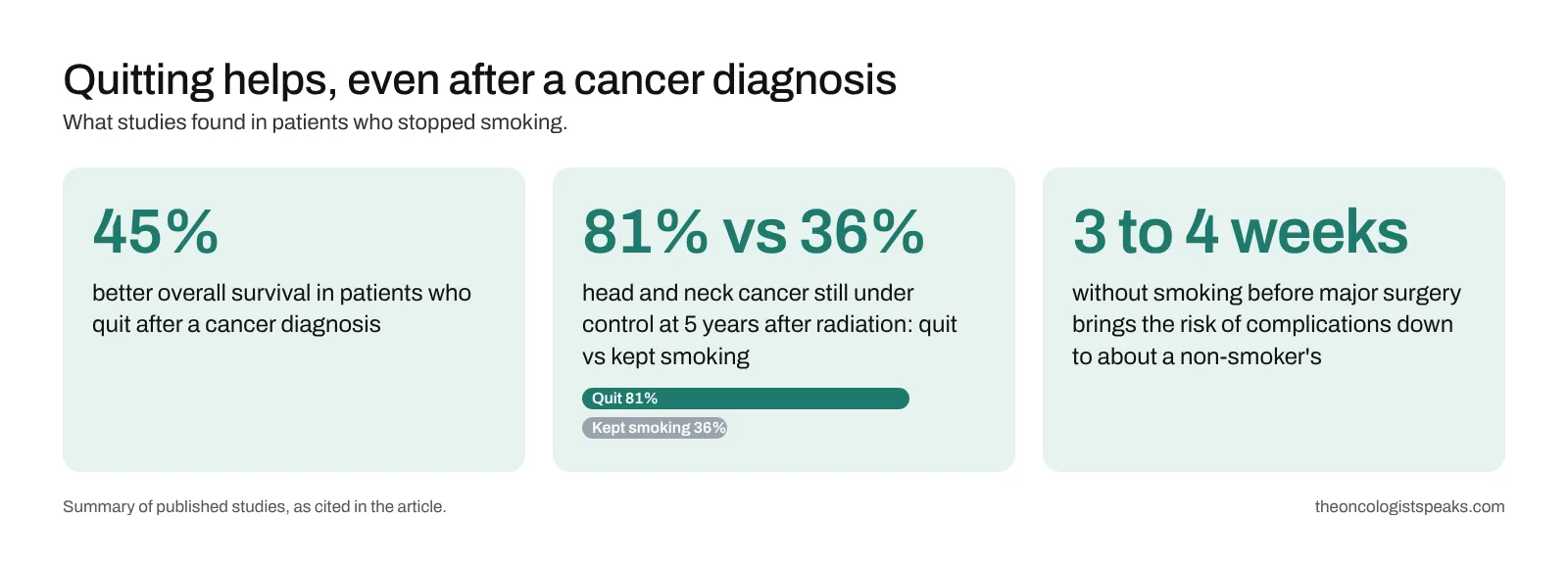
- Longer life. Combined results from studies that followed patients over time show that quitting after a cancer diagnosis improves overall survival by about 45%.
- Early lung cancer. In patients whose early lung cancer was removed by surgery, quitting lowered the risk of death by up to 66%. It also lowered the chance of the cancer coming back or spreading by 46%.
- Head and neck cancer. In patients treated with radiation, the cancer stayed under control at 5 years in 81% of those who quit, compared with 36% of those who kept smoking. Treatment complications over 10 years fell from 28% to 11%.
Quitting before surgery
If you need an operation for cancer, stopping a few weeks before it makes a real difference:
| When you quit | What it does |
|---|---|
| 3 to 4 weeks before major surgery | Your risk of complications comes down to about the same as a non-smoker's |
| 2 weeks before lung surgery | Fewer lung problems straight after the operation |
| 1 month before lung surgery | Lower risk of death in the 30 days after the operation |
5. How we help patients quit
Quitting is hard, and nobody has to do it alone. Good cancer centres follow a simple pathway so that every patient who smokes gets help:
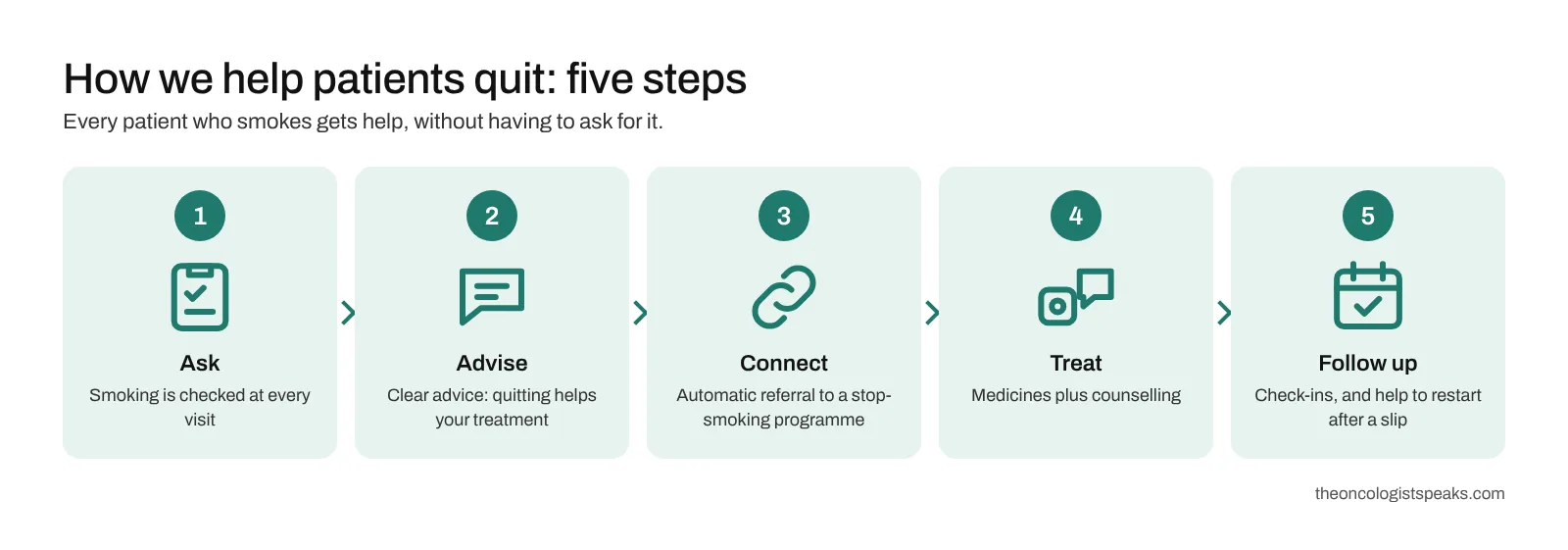
- We ask at every visit. Your smoking status is checked and recorded at your first appointment and at follow-up visits.
- We give clear advice. Your doctor will tell you plainly that quitting helps your cancer treatment work, lowers side effects and helps you live longer.
- We connect you to help automatically. Instead of waiting for you to ask, the hospital refers every patient who smokes to a stop-smoking programme or quitline, unless you say no. Studies show that this way, more than 80% of patients are contacted and close to 95% take part.
- We combine medicine and support. Stop-smoking medicines work best together with counselling, help with stress and a plan for difficult moments.
- We follow up. We check in at later visits, and if you slip, we help you start again.
Stop-smoking medicines
Approved stop-smoking medicines double your chance of quitting for good. Doctors should offer them to every patient with cancer who wants to quit, unless there is a medical reason not to.
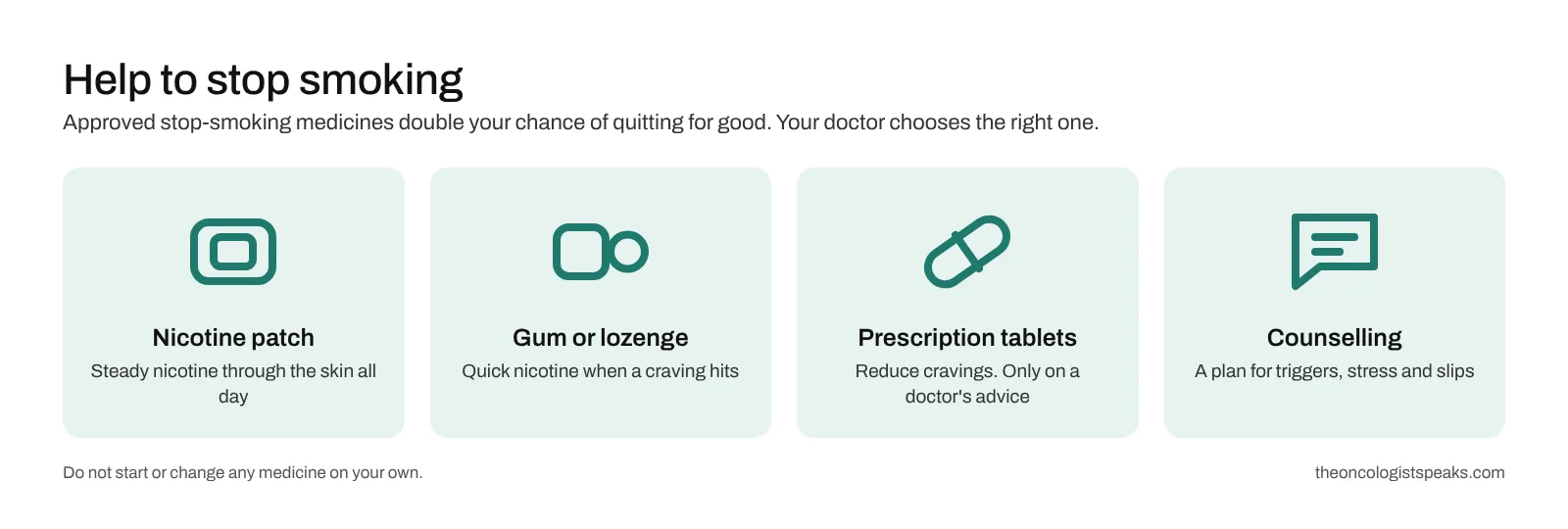
Nicotine patch
Gives a steady, low dose of nicotine through the skin all day, which eases cravings.
Good to know: works best together with gum or lozenges.
Nicotine gum or lozenge
Gives a quick dose of nicotine through the lining of the mouth when a craving hits.
Good to know: people who smoke within 30 minutes of waking usually need a stronger dose.
Prescription tablets
Two kinds are approved. They act on the brain to reduce cravings and the pleasure you get from smoking.
Good to know: your doctor decides if they are right for you and how long to take them.
Counselling and support
Helps you plan for triggers, stress and slips.
Good to know: makes any medicine work better.
Do not start or change any of these medicines on your own. Your doctor will choose the right one and the right dose for you.
6. Who smokes more, and what about e-cigarettes?
- Smoking is not spread evenly. Surveys in the United States show that adults living below the poverty line smoke at more than twice the rate of better-off adults (24.0% compared with 11.1%). More than 23% of adults who did not finish high school smoke, compared with fewer than 6% of college graduates. These gaps lead to more lung cancer, cancers found at a later stage, and lower survival in poorer communities.
- Marketing also shapes what people smoke. Menthol cigarettes, which were heavily advertised to minority and lower-income communities, contain a cooling additive that makes smoke feel less harsh. Smokers inhale more deeply and hold the smoke in longer, which carries it deeper into the lungs.
E-cigarettes and heated tobacco
- E-cigarettes and heated tobacco products have spread quickly. Expert panels agree that e-cigarettes contain fewer of the cancer-causing chemicals made by burning tobacco. But nobody yet knows if they are safe to use for a long time, or during cancer treatment. Leading cancer organisations, including the American Association for Cancer Research, the American Society of Clinical Oncology and the International Association for the Study of Lung Cancer, advise doctors to use approved stop-smoking medicines rather than e-cigarettes.
7. What you can do today
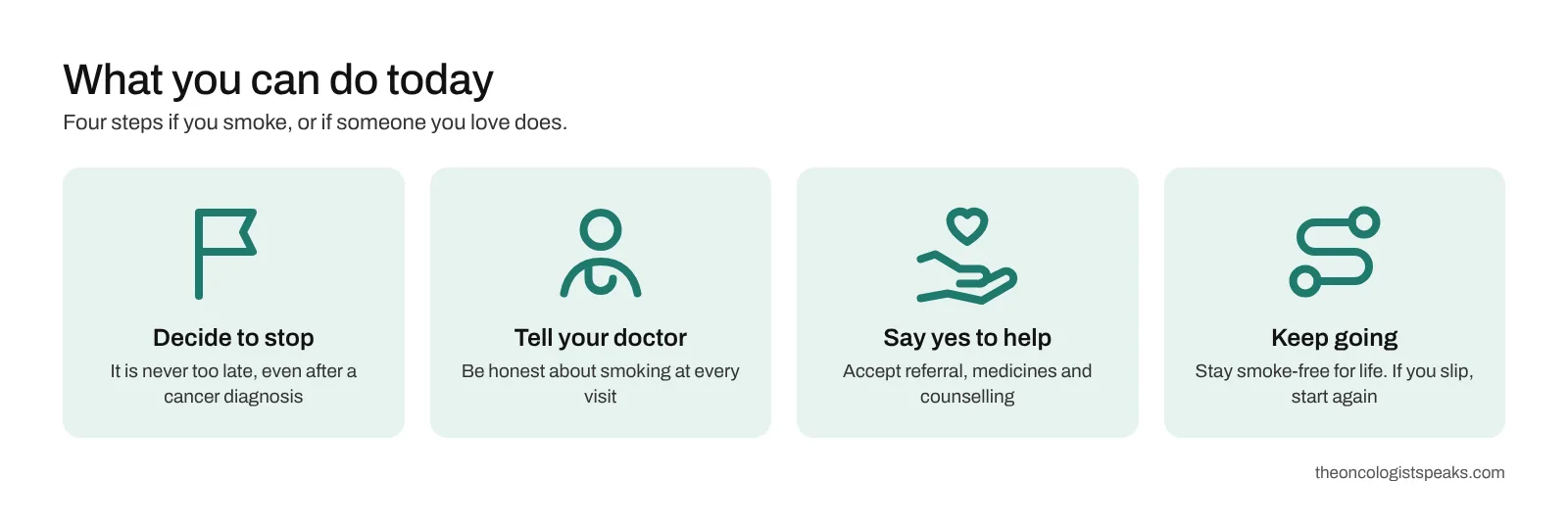
- Decide to stop. It is never too late. Quitting helps even after a cancer diagnosis.
- Tell your doctor at every visit. Be honest about smoking, so your care team can plan safer treatment.
- Say yes to help. Accept the referral to a stop-smoking programme and ask about medicines and counselling.
- Keep going. Stay smoke-free through treatment and for the rest of your life. If you slip, start again.
Frequently asked questions
Is it too late to quit if I already have cancer?
No. Quitting after a cancer diagnosis improves survival, lowers side effects and makes treatment work better.
How long before surgery should I stop smoking?
Ideally 3 to 4 weeks before a major operation. Even 2 weeks before lung surgery reduces lung problems afterwards.
Does smoking only cause lung cancer?
No. It causes cancer of the mouth, throat, voice box, food pipe, stomach, pancreas, liver, bowel, bladder, kidney and cervix, and a type of leukemia.
Does smoking affect radiation therapy?
Yes. Smoking lowers the oxygen in your tissues, so radiation kills cancer cells less well, and side effects such as mouth sores and lung scarring become worse.
Are e-cigarettes a safe way to quit?
Their long-term safety is not known, especially during cancer treatment. Cancer organisations recommend approved stop-smoking medicines and counselling instead.
Which medicine is best for quitting?
It depends on you. Nicotine patches, gum and lozenges and prescription tablets all work, especially with counselling. Your doctor will choose what is right for you.
More patient guides: Breast cancer: early signs, risk factors, screening and treatment
Sources: World Health Organization, Tobacco fact sheet and Report on the Global Tobacco Epidemic; US Surgeon General's reports on smoking (2014) and smoking cessation (2020); US National Cancer Institute, Treating Smoking in Cancer Patients (Monograph 23)